Any type of water that has been used by man or animal is considered wastewater. It is a byproduct of any activity that involves water. Effluent is another term for wastewater.
There are various types of wastewater. Wastewater is typically classified according to its source. Domestic wastewater and industrial wastewater are the two major types of wastewater. Domestic wastewater is gathered from residential apartments, whereas industrial wastewater is gathered from the business environment.
Industrial wastewater is treated according to the source of the wastewater. Wastewater generated by a pharmaceutical company differs from wastewater generated by a textile store and necessitates different treatment methods based on its chemical and biological composition.
Domestic wastewater is divided into two categories: black wastewater and grey wastewater. Black wastewater is wastewater primarily collected from toilets. Grey wastewater is wastewater collected from areas other than the toilet in the home. Grey wastewater and black wastewater have different compositions as a result of their varying source, but in wastewater treatment plants, they are mostly treated together as a single entity called domestic effluent.
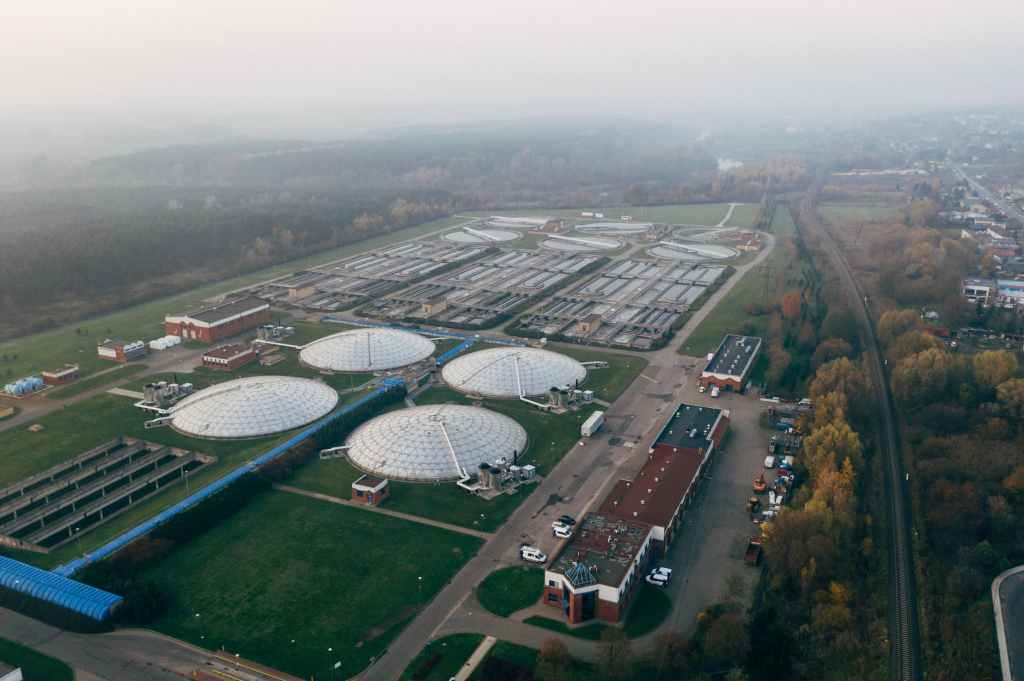
Treating wastewater partially or completely before releasing it into the environment reduces the potential environmental damage caused by contaminants and pollutants present in untreated wastewater.
Although the river has a self-cleansing mechanism when the number of contaminants and pollutants exceeds a certain threshold, the river becomes extremely toxic, and the river’s self-cleansing mechanism is less effective.
Wastewater can be treated for varying purposes. They include:
Toxin levels in the raw water supply are being reduced. When wastewater is treated before being discharged into rivers, it reduces the amount of treatment that water will be subjected to if it is used as a raw water source for water treatment plants.
Preservation of life on land and at sea. If wastewater is not treated before being discharged into rivers, it contaminates the water, increasing the amount of waste in the environment and causing significant harm to life.
Wastewater can be treated so that it can be reused. Currently, treated wastewater (either fully or partially treated) can be used to cool plant machinery and equipment. It can also be used for outdoor activities such as irrigation in farming and soil wetting during road construction. Partially treated wastewater contains plant-friendly nutrients.
Energy generation. Sludge from the primary and secondary treatment stages can be used to generate electricity.
Development of an alternative water source. Treated wastewater, to whatever extent it is treated, provides an alternative to exciting water resources because it can be used for some outdoor activities. Various laboratories are currently conducting research to determine the most efficient way to treat wastewater for portable uses.
Conclusion
Any type of water that has been used by man or animal is considered wastewater. It is a byproduct of any activity that involves water. Wastewater is typically classified according to its source, which can be either domestic or industrial.
Although the river has a self-cleaning mechanism, it poses a threat to life when the amount of pollutants or contaminants in the river exceeds a certain amount per time.
Wastewater treatment has several advantages. Aside from reducing the harm caused by waste exposure, it also provides an alternative source of water, which is important during times of water scarcity.
An environmental impact assessment (EIA) evaluates the damaging effects of a plan, policy, program, or actual project on the environment before the decision is made to move forward with the suggested action.
Before deciding whether to proceed with a planned action, a plan, policy, program, or an actual project, it’s a must to undergo an environmental assessment.
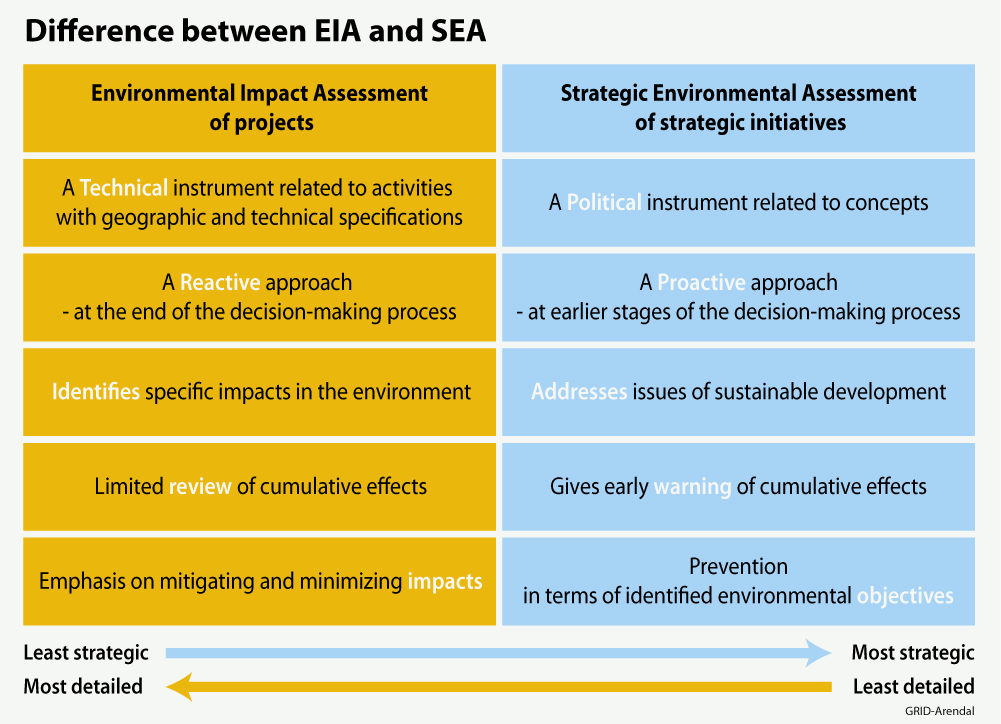
SEA, strategic environmental assessment uses the same principles as EIA, environmental impact assessment. SEA covers a more broad area and is less detailed than EIA.
Strategic environmental assessments consider the environment and other sustainable factors like the economy or society. It is a tool for environmental management that is used in the approval and decision-making processes for projects.
Figure 1: Difference between EIA and SEA. Source: Grid Arendal
Environmental Impact Assessment aims to provide the decision-makers and planners for a project with an in-depth understanding of the overall effects the environment is expected to have. This information in turn helps the planners whether to go ahead with the project or give it up.
An Environmental Impact Statement (EIS) is an EIA but on a more comprehensive and detailed scale. EIA just helps the decision-makers to decide whether or not to select a particular project or not. EIS has all the details of an EIA and also feedback from people who would be direct or indirect beneficiaries of the project.
An EIS also entails alternatives to the proposed project, policy, program or plan and has the details of their environmental impact.
The EIS is a more detailed EIA, whereas the SEA is a more comprehensive, but not necessarily detailed, EIA. EIA will provide you with a basic understanding of the environmental impact of your program or plan. SEA will tell you what it is doing to the environment as well as the impact on the economy and people’s lives in that area. EIS will inform you of the environmental impact of your program, consumer opinions, proposed alternatives, and their environmental impact.
EIA and SEA can be performed in our regular day-to-day activities. If you were making an order at a restaurant and you have a budget you don’t plan to exceed but you still wish to treat yourself to something nice. Your budget as a determining factor makes it SEA. If you were a detailed and analytical person (like me) that goes as far as considering how the food was made and the amount of waste generated while making the food and use that knowledge to choose what food on the menu you would go for, that is EIA. The belief is that the lesser the amount of that food consumed, the lesser waste is generated for that restaurant. The lesser the negative impact it has on the environment.
EIS is also useful in everyday situations. If you went to the grocery store to buy milk and didn’t have a specific brand in mind, you’d probably ask for recommendations from someone who works there or someone who buys similarly to you. You will compare the various brands to find the best quality at the lowest price. The expiry date of the milk (for fresh milk) and the contents of the milk are two things you’d look out for. If you consider things like milk packaging to determine which best protects environmental health, all of the following procedures could be considered EIS.
Conclusion
Environmental Impact Assessment evaluates the damaging effects of a plan, policy, program, or actual project on the environment before the decision is made to move forward with the suggested action.
Strategic Environmental Assessment covers the same scope as EIA and also considers other scopes such as the economic or social impact of such a project. SEA is usually broader but less detail-oriented compared to an EIA.
Environmental Impact Statement is a more detailed EIA. It contains information such as consumer feedback, alternative projects and their environmental impact.
EIA, SEA, and EIS assist in making more informed and near-perfect environmental decisions. Incorporating them into our daily lives can help us make better decisions while also caring for the environment.
Hydraulic structures are structures that are submerged in water completely or partially. They could be used to transport water, store water, or restrict the flow of water. In other words, hydraulic structures influence the natural flow of water.
A hydraulic flow meter can be used to measure the flow of water in hydraulic structures. It measures the rate at which water flows through hydraulic structures. To determine the flow rate, the hydraulic flow gauge should be placed at any point along the hydraulic grade.
One of the questions posed during the planning stage of any construction project is, “Where is the water path?” Knowing the water path, the purpose of the hydraulic structure, the area’s topography, and the volume of water for the proposed construction area provide a basic understanding of the type of proposed hydraulic structure to be used.
Understanding the topography of the construction area and acting according to it or using it to one’s advantage eases the stress of construction even when there is a well-written out plan for the type of hydraulic structure to be erected. For example, if a storage dam is to be built along a river with a steep slope, building a coffer dam first eases construction because there will be little to no water in the construction area. Depending on how it is built, the coffer dam can easily be converted to a debris dam to trap dirt after construction.
Figure 1: A view of a dam from the spillway. Source: Flickr.
Types of hydraulic structures
Hydraulic structures include:
Dam
Culvert
Bridge
Drains
Weirs
Dams
Dams are built to regulate the flow of water. Dams could be used to alleviate flooding by retaining water and reducing the amount of water that flows downstream. The water stored in the dam’s reservoir could also be used to irrigate during times of scarcity.
Dams are classified according to their purpose, design, and structure. Dams classified according to their purpose, include:
Storage dam is the most common type of dam. It is used to collect rainwater and store it for use when there is a low amount of rainfall. The stored water can be used for irrigation or to generate electricity.
Diversion dams are also known as weirs. They divert water from its natural course into farms for irrigation.
Detention dams are primarily used for flood control. It is usually built downstream, but to ensure its effectiveness, it is sometimes built at various points along the river to properly retain the water. It retains water during flash floods and releases it at a controlled rate after the flood to protect the downstream.
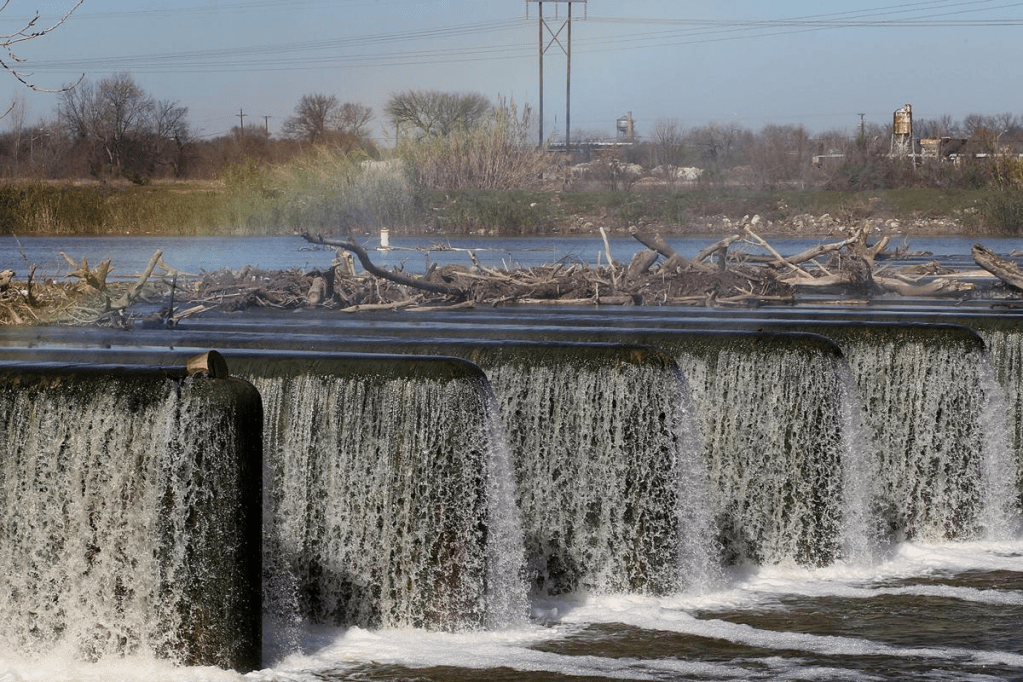
Debris dams are typically built near storage dams to reduce the number of impurities in the water entering the storage dam.
Coffer dams are temporary dams built to hold water while a primary dam is being built. After the primary dam is built, it is either converted into a debris dam or demolished.
Figure 2: A debris dam trapping wooden debris. Source: Waco Tribune-Herald
Culverts and bridges
Culverts and bridges perform similar functions in that they both provide transportation over a body of water. Bridges are used not only over bodies of water but also when there is a deep valley between two mountains.
Bridges are typically built with precast members. Culverts are typically cast on-site, but they can also be precast and assembled on-site. Bridges generally require more time to plan and build and hence can’t have rushed construction work. Bridge construction is also less economical because it requires more time and technical personnel.
Because bridges and culverts are so similar, the purpose of the hydraulic structure and a variety of other factors are considered before deciding whether to build a bridge or a culvert. The properties of the construction site are usually used as a final determinant for the type of hydraulic structure.
For example, why would you build a culvert in place of a bridge, or vice versa? Can you provide an explanation for your decision? Let’s use this as an example. A stream runs through a proposed road construction site. The depth to the river bed is 7m. The stream is 8 meters wide and has vegetation planted along its path. During rainy seasons, the river has an 85% chance of overflowing its banks. A manufacturing company is to the right upstream, and a secondary school and a church are to the right and left, respectively, downstream. It’s June, and we’re planning to start building in the next two weeks. Do we build a bridge or a culvert?
If the depth to the river bed is greater than 6m, a bridge should be considered. If there is so much unsuitable material at the river’s bed, a bridge may be a better option. Consider using a culvert if there is an easy way to divert the water. If there is a lot of water, a bridge is a better option.
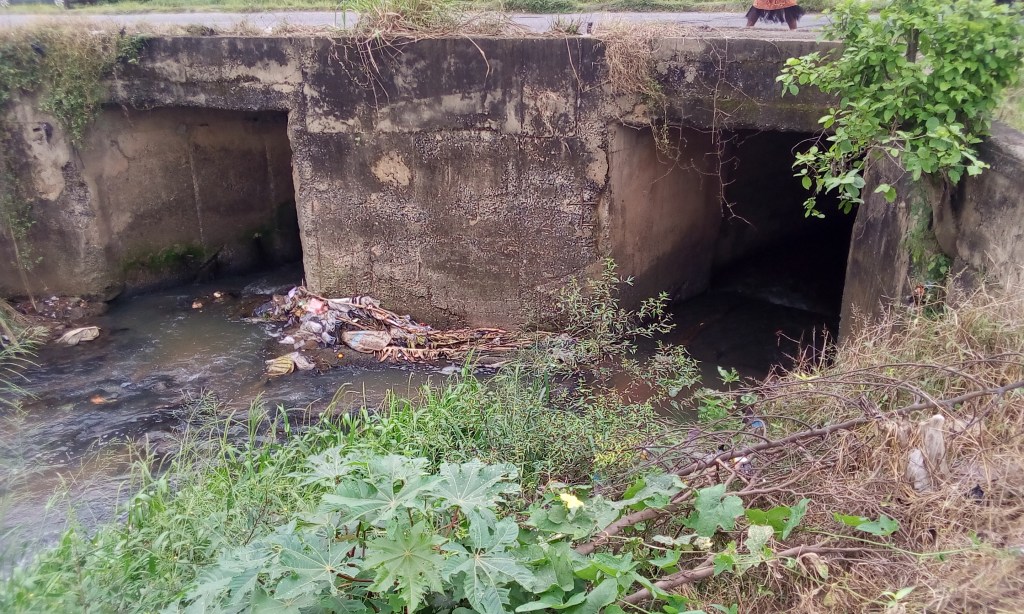
If you do decide on a culvert, there are guidelines for selecting a specific type of culvert. A pipe culvert, a box culvert, a pipe-arch culvert, or any other type of culvert could be used.
Figure 3: Orogun box culvert at Orogun, Ibadan, Nigeria.
Drains
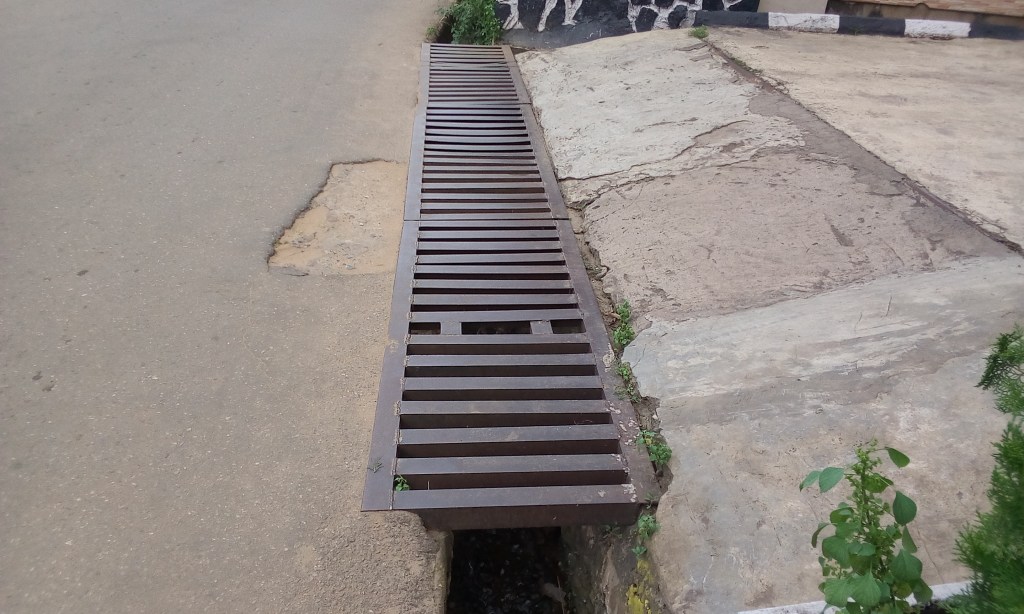
Drains are hydraulic structures that remove excess water from the earth’s surface or subsurface. Surface water is collected, removed, and disposed of by road drains (or stormwater drains). Road construction is only considered fully completed when there is a road drain. Road drainage systems ensure that no or a small amount of water remains on the road. This helps to ensure the road’s stability and durability, as structures that are constantly exposed to water are more prone to deterioration.
Drains could be opened or closed. A drain should be kept closed for safety reasons. A closed drain is an example of a pipe drain. Having drains around keeps the area dry. A city should have an adequate drainage system. When it is insufficient (cannot carry the amount of water coming into it) or inadequate (in number and networking), the city is at risk of flooding.
Drains not only remove stormwater from roads, but they can also transport wastewater to treatment plants, treated water to consumers, and much more. Normally, wastewater drains are closed (with only an entry and exit)
Figure 4: A road drainage along Orogun road, Ibadan, Nigeria.
Conclusion
Hydraulic structures influence the natural flow of water. The flow of water can also be measured in hydraulic structures using a hydraulic flow meter.
Understanding the water path, the purpose of the hydraulic structure, the topography of the area, and the volume of water in the area provides a foundation for determining the type of hydraulic structure that should be used.
Dams are built to restrict the flow of water and are primarily used to address flooding and water scarcity issues. It can also be used for energy generation and recreation. Dams are classified according to their purpose, design, and structure. Dams are classified into storage, diversion, detention, debris, and coffer dams based on their purpose.
Bridges and culverts have similarities and advantages over one another. A basic understanding of the nature of the construction site aids in the selection of the ideal hydraulic structure. Choosing the appropriate hydraulic structure aids in the adequate conveyance of water while reducing the risk of flooding.
Hydraulic structures are an essential component of the environment. Hydraulic structures, whether natural or man-made, help to manage water bodies and reduce the likelihood of flooding when they are well-networked.
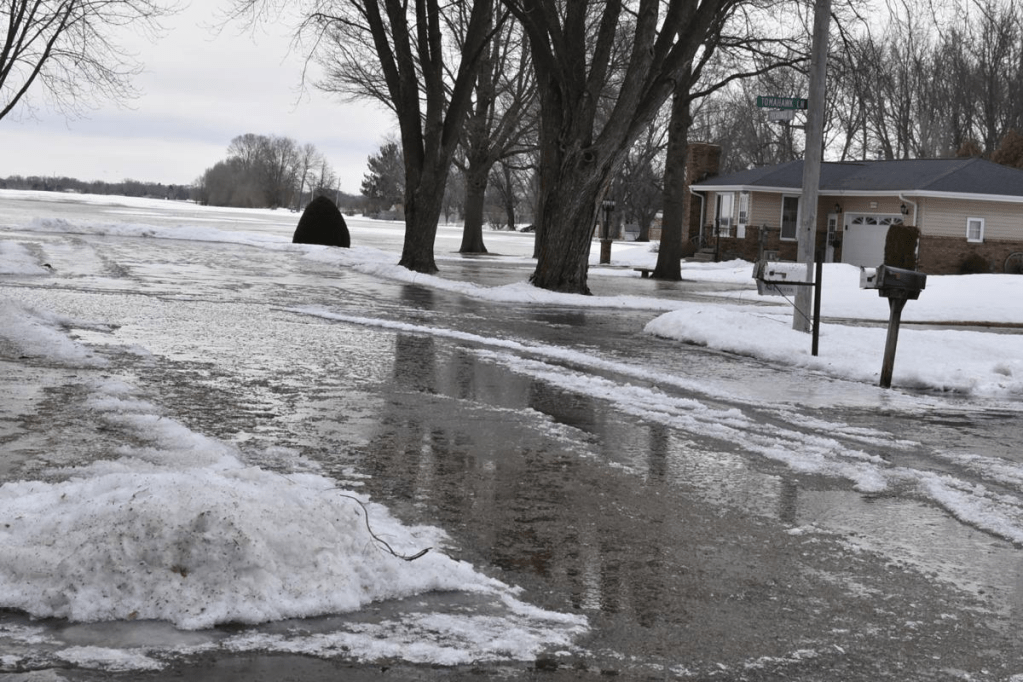
Flooding can occur due to rainwater accumulation in an already saturated area, storm surges, or rapid melting of snow. Flooding is a common phenomenon in lowlands and floodplains, especially during rainy seasons, but it can occur anywhere. A snowmelt flood is a type of flood in which melted snow is the primary source of water.
Snowmelt flood. Source: Google.
Types of flooding.
Flash floods. This is usually associated with unexpected and heavy rain. It usually lasts less than 6 hours. It happens mainly because the amount of rainfall is greater than what the ground can handle in a given amount of time. Flash floods can also occur as a result of rapidly melting snow or a hurricane. This type of flood is a disaster flood because it involves a large volume of water moving at high velocity, easily sweeping anything in its path.
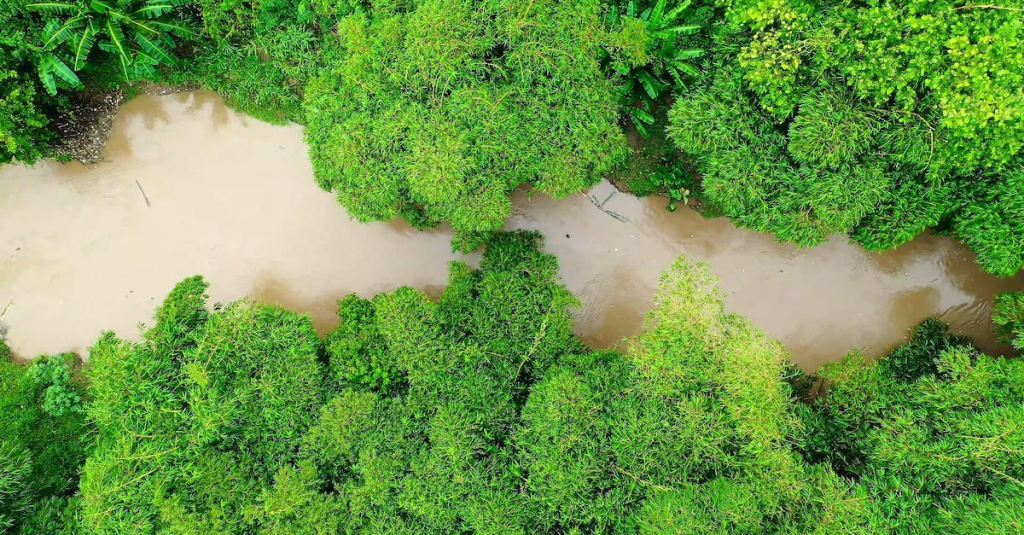
River floods. This primarily impacts lowlands and floodplains. When it rains for an extended period of time, the amount of water in the river rises to the point where it overflows its banks. Planting trees along the river’s path and channelizing the river could reduce the likelihood of a river flood.
Coastal floods. This is caused by a sudden increase in sea levels, such as during a storm surge. The seawater occupies normally dry ground around it.
Groundwater flood. It is an elevation of the existing water table above the rock or soil beneath, causing water to flow to the ground surface. This is caused by constant rainfall. It may occur days to months after the rainfall has occurred.
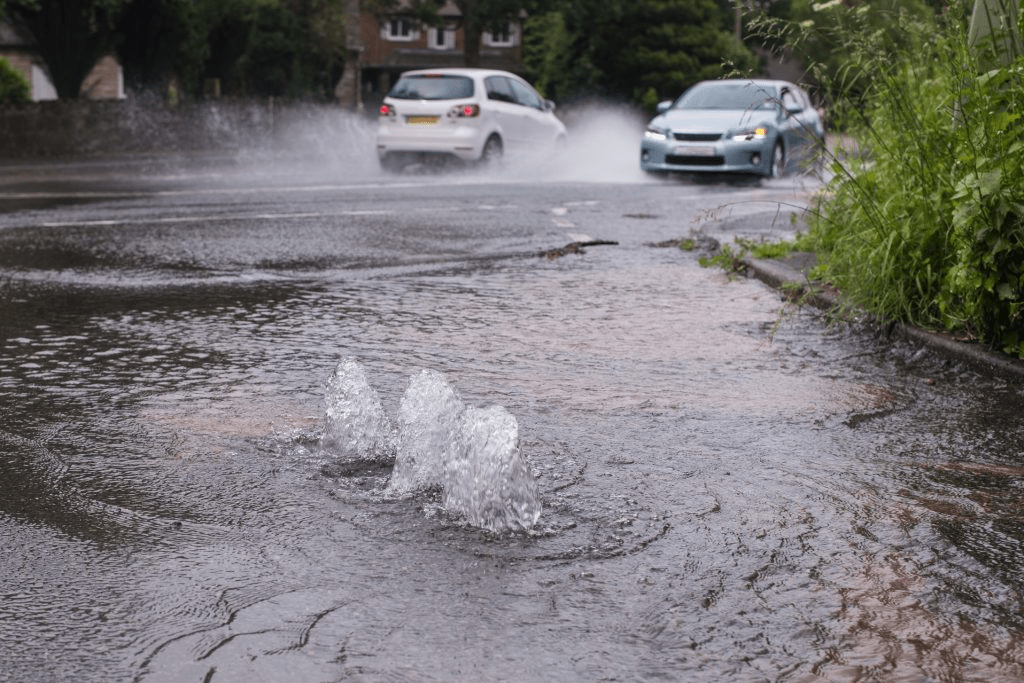
Drain and sewer flood. A blockage in the drainage system is the most common cause of a drain and sewer flood. It could also happen in the case of a combined sewer if there is heavy rain for an extended period of time.
Flooding can occur on any type of land. Although some areas are more prone to flooding than others, a combination of the following measures could reduce the risk or severity of flooding in an area.
Having a functional drainage system or a clearly defined water path.
Planting trees or other vegetation.
Collecting rainwater from the roof and transferring it to the nearest drainage.
When building a house, make sure the ground around it slopes away from it.
Plants should be kept at least 1.5 meters away. Trees should be kept at least 5 meters away.
Put a halt to indiscriminate waste disposal. Improperly disposed of waste always finds its way into drains and clogs them.
As soon as possible, clear any clogged drains and repair any busted pipes in or around the house.
In areas where groundwater flooding occurs, use a waterproof membrane before beginning any work to prevent water from rising continuously.
Use a water repellent to coat the lower portion of the external walls to prevent water seepage.
Keep outer drains at least 3m away from buildings.
Figure 3: Vegetation along the river path to reduce the risk of river flooding. Source: Google.



 Jay water advisory