By Jay Water Advisory
Something has shifted in the last decade or two. The heat feels different. Not just hotter — heavier. More persistent. You step outside at 7am and the warmth is already waiting. By midday, even the shade offers little relief. By evening, the air inside a room with no fan feels suffocating in a way it simply did not years ago.
You are not imagining it. And the full explanation goes beyond what most people assume.
Yes, Climate Change Is Real — But It Is Not the Only Thing at Work
Climate change is happening, and Nigeria is feeling its effects acutely. Nigeria experiences varying but increasingly intense temperature fluctuations, with heat waves becoming more frequent and severe, particularly in urban centres. But climate change alone does not explain why your particular town — which may not even be a major city — feels noticeably hotter than it did fifteen or twenty years ago, even compared to surrounding rural areas.
The missing piece of the explanation is something called the Urban Heat Island effect — and it is operating silently in towns and communities across Nigeria, including places far smaller than Lagos or Abuja.
What an Urban Heat Island Actually Is
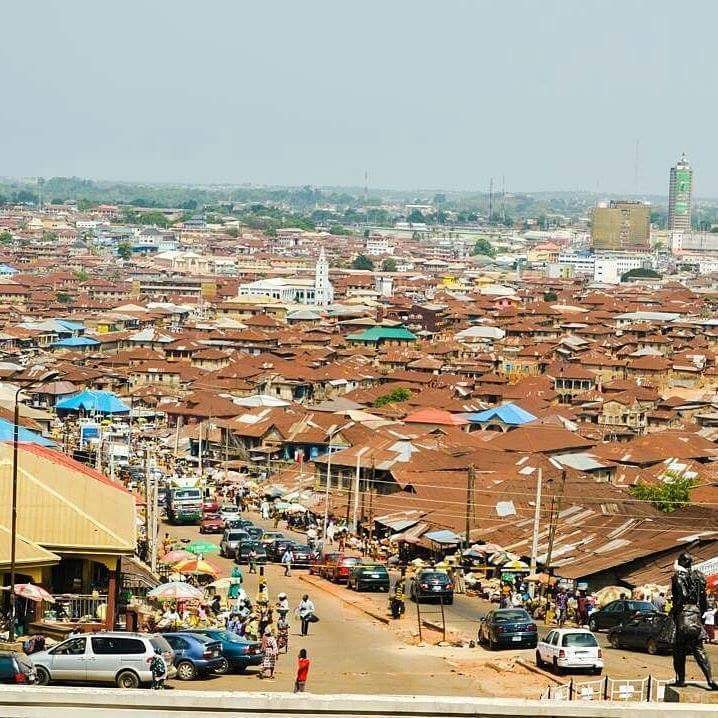
An urban heat island forms when natural land, such as soil, trees, grass, open water is progressively replaced by built surfaces, such as concrete buildings, zinc rooftops, tarred roads, paved compounds, and block walls.
The difference in behaviour between these two types of surfaces is dramatic. Natural surfaces absorb heat during the day and release it through evaporation and plant transpiration — a cooling process that happens continuously. Concrete and asphalt, by contrast, absorb and store large amounts of heat during the day and release it slowly through the night. Concrete can hold roughly 2,000 times as much heat as an equivalent volume of air. This means every new building, every newly tarred road, every paved compound is adding to a growing heat reservoir in your community.
The result is that urban areas consistently experience warmer temperatures than their surrounding rural areas — sometimes by 2 to 5 degrees Celsius. That difference may sound small, but when the baseline temperature is already 35°C, it is the difference between uncomfortable and dangerous.
Why It Feels Worse Than It Used To
Look at how your town has changed in the last two decades. Where there were trees, there are now buildings. Where there was open ground, there is now concrete. Where there were compounds with soil and grass, there are now fully cemented yards — because cement is seen as cleaner, easier to maintain, and more modern.
What happens in most cases is that as built-up areas expand, vegetation cover declines, and land surface temperatures rise in direct proportion. Southwest Nigeria has experienced a 20% decline in vegetation coverage and a 15% increase in bare soil which is a total of 35% change caused by human activities
Generators add another layer. Approximately half of energy demand in Nigerian urban areas is met by diesel and petrol generators. Generators are machines that simultaneously emit heat, exhaust gases, and carbon dioxide into the immediate surrounding air. Multiply that by thousands of generators running simultaneously in a densely populated area and the localised warming effect is real and measurable.
Urban heat island effect is intensifying faster in lower-income countries than anywhere else in the world . It is increasing at a rate of 0.021°C annually with sub-Saharan African communities among the most exposed. High temperatures also reduce work productivity by up to 20% and impair concentration and learning. These are consequences that are felt daily in schools, offices, and markets across Nigerian towns.
What Can Actually Be Done
The urban heat island effect is not inevitable — it is the result of specific decisions about how land is used, and different decisions can reverse it or at least ease it.
Plant trees wherever possible. A single mature tree provides shade, cools surrounding air through transpiration, and reduces the surface temperature of the ground beneath it significantly. Street trees, compound trees, and trees along fences all contribute. Plants actively remove pollutants from the air while cooling their immediate environment — two benefits for the effort of one.
Resist the urge to cement everything. A cemented compound looks clean but behaves like a small heat storage unit. Leaving portions of your compound as bare soil, grass, or gravel allows natural evaporative cooling to continue. Even decorative plants in containers contribute to this cooling effect.
Paint rooftops white or light colours where possible. Light-coloured surfaces reflect more solar radiation than they absorb. Dark zinc roofing in particular absorbs and radiates substantial heat into the rooms below and the air above. Where re-roofing is not practical, even a coat of white or reflective paint makes a measurable difference.
Advocate for green spaces in community planning. Trees along streets, open parks, and vegetated public areas are not luxuries — they are infrastructure. Communities and local governments that factor green space into planning decisions are investing in temperature management as much as any other public utility.
A Final Thought
The heat you are feeling is real, it is local, and it is partly a consequence of decisions made at the community level — not only forces acting from the global atmosphere above. Climate change sets the baseline. The urban heat island raises it further. And every tree removed, every compound cemented, and every generator running around the clock adds a small but cumulative contribution to an environment that is measurably harder to live in than it was a generation ago.
The reverse is also true. Every tree planted, every strip of soil kept open, every rooftop painted white is a small act of cooling. Multiplied across a community, those acts matter.
 Jay water advisory