Tag: #water

  • When the Wells Run Dry: Groundwater Abstraction and the Crisis Ahead

    When the Wells Run Dry: Groundwater Abstraction and the Crisis Ahead

    There is water beneath your feet right now. Deep in the earth, stored in layers of rock and sediment built up over thousands of years, sits one of humanity’s most critical resources — groundwater. For billions of people across the world, it is the water that comes out of the tap, irrigates food, and keeps industries running.

    And we are pulling it out far faster than the earth can put it back.

    The Invisible Drain

    Groundwater abstraction simply means pumping water out of underground reservoirs called aquifers. It sounds harmless enough. What most people don’t realise is that many of these aquifers took centuries — sometimes millennia — to fill. When we drain them faster than rainfall can recharge them, we are spending a savings account that took nature thousands of years to build.

    A landmark study published in Nature (Jasechko et al., 2024), analysing over 170,000 monitoring wells across 1,693 aquifer systems worldwide, found that groundwater levels have accelerated in their decline over the past four decades in 30% of the world’s regional aquifers. An earlier study by Wada et al. found that global groundwater depletion more than doubled between 1960 and 2000, driven primarily by rising water demand.

    Agriculture is the biggest driver. According to the UN’s World Water Development Report, agriculture accounts for roughly 70% of all freshwater withdrawals worldwide. Add rapid urbanisation, population growth, and increasing industrial demand, and you have a recipe for a slow-moving catastrophe.

    Bello’s Farm

    Picture Bello, a rice farmer in a rural community. Twenty years ago, his grandfather dug a well about 15 metres deep and always found water. Bello now drills at 60 metres — and in the dry season, even that runs low.

    His neighbours have done the same. So have the large commercial farms upstream. Everyone is drilling deeper, competing for the same shrinking reserve beneath the ground. No one planned this. No one coordinated it. It simply happened — one pump at a time.

    This is not a fictional scenario. Versions of Bello’s story are playing out across Sub-Saharan Africa, South Asia, the Middle East, and even parts of the United States and Europe today — as the UC Santa Barbara research team noted, with depletion accelerating fastest in dry regions with extensive croplands.

    What Happens When the Aquifer Runs Low?

    The consequences go well beyond thirsty taps.

    Food insecurity. Groundwater-dependent agriculture feeds a significant portion of the world’s population. As water tables fall, crop yields drop and food prices rise — hitting the poorest communities hardest.

    Land subsidence. When underground water is removed, the earth above can sink. Research published in Geophysical Research Letters has confirmed measurable groundwater-linked land subsidence in cities including Mexico City, Jakarta, and Lagos. A separate study in Nature Cities found that at least 20% of urban areas in the 28 most populous US cities are already sinking, mainly due to groundwater extraction. Infrastructure cracks. Buildings tilt. Floods worsen because the land no longer sits at the same elevation it once did.

    Saltwater intrusion. In coastal areas, when freshwater aquifers are depleted, seawater seeps in to fill the gap — permanently contaminating what was once drinkable water. This is already being observed along coastlines across West Africa, South and Southeast Asia, and the Mediterranean.

    Conflicts over water. Scarcity breeds competition. Communities, farmers, and nations that share aquifer systems are increasingly in tension. Water conflicts that once seemed distant are becoming real policy emergencies.

    A City Running on Borrowed Time

    Consider what happened in Chennai, India, in 2019. One of India’s largest cities, home to over 10 million people, declared “Day Zero” on 19 June 2019 — the day when all four of its main reservoirs had run completely dry. Residents waited in long queues for government water tankers. Businesses and hotels shut down. Families in slums received as little as 30 litres of water per day.

    As the World Resources Institute reported, the crisis was not simply about one bad monsoon. Rapid urbanisation had paved over wetlands that once allowed rainwater to percolate and recharge the aquifer naturally. Unregulated borewell drilling had depleted groundwater reserves over many years. The city did not suddenly stop receiving rainfall — the crisis was years in the making.

    Chennai has since made progress. But the warning it sent to the world was stark: groundwater depletion does not announce itself until it is almost too late.

    The Compounding Effect in the Next Decade

    Here is what makes the coming decade particularly concerning — the effects will not stay separate. They will compound.

    Climate change is already making rainfall less predictable. As wet seasons become less reliable, more people will turn to groundwater to compensate. This increases abstraction pressure at the exact moment that aquifer recharge is slowing due to shifting rainfall patterns. The UCSB study found that 90% of aquifers where declines were accelerating are located in places that have gotten drier over the last 40 years — a direct link between climate stress and groundwater loss.

    At the same time, global population is still growing. Urban expansion is paving over land that once allowed rainwater to percolate down and recharge aquifers naturally. Deforestation removes the vegetation that regulates the water cycle.

    Each of these pressures alone would be manageable. Together, they create a feedback loop: less recharge, more demand, deeper drilling, faster depletion, greater scarcity — which drives even more extraction. Excessive groundwater extraction is projected to impact 19% of the global population by 2040, according to the World Economic Forum.

    So What Can Be Done?

    The good news is that this is not inevitable. Communities, governments, and individuals are already showing what is possible.

    • Rainwater harvesting at household and community scale can reduce dependence on groundwater significantly — and it was one of the key recommendations for Chennai after its 2019 crisis.
    • Drip irrigation and water-efficient farming methods can cut agricultural water use by up to 50% without reducing yields, according to MIT engineers and multiple field studies.
    • Groundwater monitoring and regulation — knowing how much is being taken out and by whom — is essential to managing shared aquifers fairly. Bangkok halted its severe subsidence by strictly regulating groundwater pumping and investing in alternative water sources.
    • Treating and reusing wastewater reduces the pressure to extract fresh water in the first place.
    • Protecting recharge zones — forests, wetlands, and open land — keeps natural replenishment working.

    None of these solutions require waiting for technology that does not yet exist. They require political will, community action, and a genuine recognition that groundwater is not an infinite resource.

    Conclusion

    Water beneath the ground is like money in a joint bank account shared by an entire generation. Every litre extracted today is a litre unavailable tomorrow — and the account statements are rarely read until the balance hits zero.

    The wells are not dry yet. But if the patterns of the last forty years continue unchecked, many of them will be within our lifetime. The time to act is while there is still water in the ground to protect.
  • After the Floods: How Floodwater Contaminates Your Drinking Water and What to Do

    After the Floods: How Floodwater Contaminates Your Drinking Water and What to Do

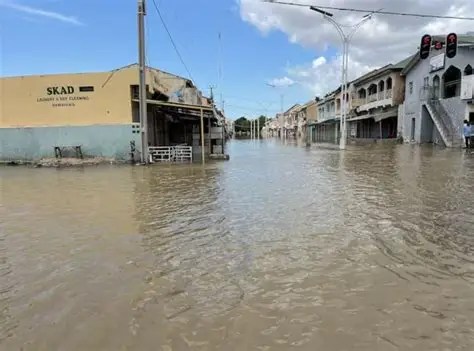
    The rains have come. Streets are submerged, drains are overwhelmed, and water is everywhere. Then the floods recede — and life slowly tries to return to normal. You turn on your tap or pump your borehole, relieved that the water is flowing again.

    But is it actually safe?

    This is one of the most dangerous assumptions made after flooding in Nigeria. Floodwater does not simply pass through — it leaves something behind. And what it leaves behind in your water sources can make you very sick.

    What Floodwater Actually Carries

    Floodwater in Nigerian cities and towns is rarely just rainwater. By the time it reaches your compound, it has swept through streets, open drains, dumpsites, pit latrines, and sewage channels — picking up everything along the way.

    Research published in Applied Water Science confirms that flooding increases faecal indicator bacteria counts in groundwater sources during and immediately after flood events. In simple terms: floodwater carries faecal matter, and it finds its way into wells and boreholes.

    The specific contaminants introduced include:

    Bacteria such as E. coli, Salmonella, Shigella, and Vibrio cholerae — all capable of causing severe illness. A study assessing water sources in Ibadan found E. coli and Salmonella in wells and boreholes, with contamination significantly higher during the wet season.

    Parasites such as Giardia lamblia, Entamoeba histolytica, and Cryptosporidium — which cause persistent diarrhoea and stomach illness and are harder to kill than bacteria.

    Chemicals from flooded dumpsites, fuel stations, agrochemical stores, and industrial areas — including heavy metals, pesticides, and petroleum compounds that boiling alone cannot remove.

    Sediment and debris that clouds the water and provides hiding places for pathogens, making it harder to treat effectively.

    This is not a theoretical risk. It has direct, measurable consequences for Nigerians every single rainy season.

    The Cholera Connection

    The link between flooding and cholera in Nigeria is well-documented and deeply alarming. In 2024 alone, Nigeria reported over 10,837 cholera cases and 359 deaths across 35 states and the FCT, according to WHO data — with the outbreak triggered and worsened by flooding across the country.

    Save the Children reported that Nigeria’s cholera fatality rate reached 2.9% in October 2024 — nearly three times the 1% international standard. Children under five were among the most affected.

    A review published in Frontiers in Public Health notes that cholera outbreaks in Nigeria consistently peak between June and September — exactly when the rainy season and floods are at their most intense. Flooding overwhelms water systems, contaminating drinking sources with Vibrio cholerae from sewage and waste, creating conditions for rapid transmission.

    Water scarcity and water quality are two sides of the same coin. Poor water quality directly or indirectly implies water scarcity. The dumpsites and chemical stores that floodwater sweeps through add a toxic dimension to an already dangerous situation. This further worsens the quality of an already poor water quality in some cases.

    Why Wells and Boreholes Are So Vulnerable

    Many people assume that boreholes are safe from flooding because they draw water from underground. This is only partially true.

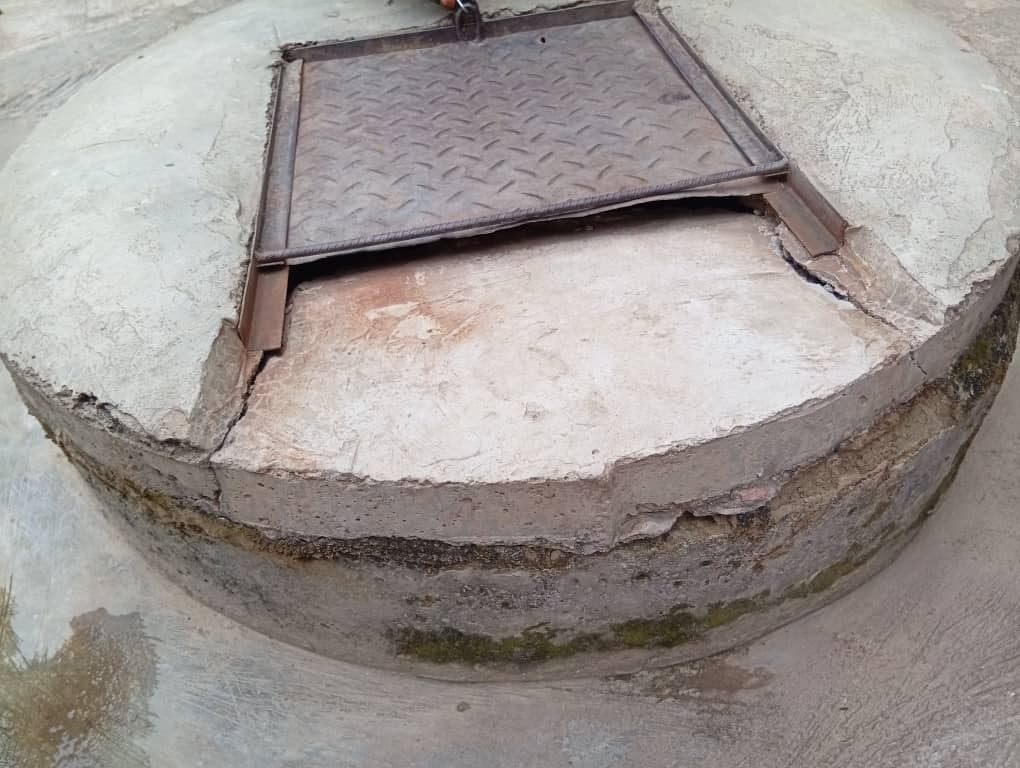
    A study on borehole water quality in Port Harcourt found that boreholes in flood-prone and densely populated areas showed significant microbial contamination. The routes of entry include:

    • Damaged or loose well caps that allow floodwater to pour directly into the casing
    • Cracked well casings that create pathways for contaminated surface water
    • Saturated soil around the borehole that carries pathogens downward into the aquifer
    • Old or rusty pipes in the distribution system that allow bacteria to enter, as highlighted in our earlier piece on pipeline leakages
    A well with a poorly fitted cover
    Hand-dug well with an ill-fitting cover

    Shallow hand-dug wells are the most vulnerable of all — often directly exposed to surface water during flooding. Research in Lagos confirmed that shallow wells showed the highest contamination levels, with contamination significantly worse during periods of heavy rainfall.

    Deeper boreholes with intact casings and proper sealing offer more protection — but even these are not immune if the infrastructure around them has been compromised.

    Signs Your Water May Be Contaminated After a Flood

    Your water may not look or smell different, but watch for these warning signs:

    • The borehole or well was submerged or surrounded by floodwater
    • The well cap or casing was visibly damaged, displaced, or loose
    • The water appears cloudier or has a different colour than usual
    • There is an unusual smell — earthy, chemical, or sewage-like
    • Multiple people in the household or community fall ill with diarrhoea or vomiting shortly after using the water
    • The flood passed through areas with dumpsites, pit latrines, or fuel stations nearby

    If any of these apply, treat your water as contaminated until confirmed otherwise.

    What to Do — A Practical Step-by-Step Guide

    Step 1 — Stop using the water immediately for drinking and cooking. Do not assume floodwater-affected sources are safe. Use stored bottled water, sachet water or water from a known clean source as your first priority.

    Step 2 — Let the floodwater fully recede before assessing your source. Do not turn on the borehole pump while the surrounding area is still flooded — this can pull contaminated surface water into the system.

    Step 3 — Inspect the physical condition of your well or borehole. Check for a damaged casing, displaced cap, sediment inside the casing, or visible debris. If structurally damaged, call a licensed borehole technician before use.

    Step 4 — Flush the system. Once floodwater has receded and the structure appears intact, run the pump for an extended period to flush out the immediate post-flood water before attempting treatment.

    Step 5 — Boil your water. According to the CDC, boiling is the most reliable method for killing bacteria, viruses, and most parasites. Bring water to a vigorous rolling boil for at least one full minute, then allow it to cool in a covered, clean container before use. Boiling works for biological contamination — but will not remove chemicals, heavy metals, or fuel.

    Step 6 — Chlorinate if boiling large volumes is not practical The US EPA recommends using regular unscented household bleach (sodium hypochlorite, 5–8%) for emergency disinfection. For clear water, add 6 drops per litre. For cloudy water, first strain through a clean cloth, then add 12 drops per litre. Stir and let stand for 30 minutes before use.

    Step 7 — Filter before you treat. If water is visibly cloudy or turbid, strain it through a clean cloth or fine filter before boiling or chlorinating. Turbid water blocks the effectiveness of both methods — particles shield pathogens from heat and chemical treatment.

    Step 8 — If you suspect chemical contamination, do not boil. Water that smells like fuel, has an oily sheen, or comes from an area where chemicals were stored or flooded should not be used at all. Boiling concentrates chemicals — it does not remove them. Find an alternative source and seek professional assessment.

    After Treatment — Storage Matters Too

    Treating your water carefully and then storing it in a dirty container or an open bucket undoes all the effort. Store treated water in clean, covered containers. Do not dip unclean hands or cups directly into stored treated water — use a clean ladle or tap.

    Prevention — What You Can Do Before the Next Flood

    • Raise your wellhead — boreholes and well casings should sit above the typical flood level of your compound
    • Seal your well cap properly — a tight, secure cap is one of the simplest and most effective barriers against contamination
    • Store clean water before the rains peak — fill clean containers during dry periods as a reserve
    • Know where your nearest safe water source is — churches, schools, or community water points may have safer supply during emergencies
    • Never locate a borehole near a pit latrine or dumpsite — they should be at minimum 30 metres apart, as public health guidelines recommend

    Conclusion

    Flooding does not end when the water drains away. It leaves behind a contamination problem that is invisible, odourless, and life-threatening — particularly for children under five, who are the most vulnerable to the waterborne diseases that follow.

    The good news is that practical, low-cost steps can protect your household. Boiling, chlorination, proper storage, and basic borehole maintenance are not complicated. They simply require awareness — and that is exactly what this article is for.

    When the floods come this year, do not just ask whether the water is flowing. Ask whether it is actually safe.

    For more on Nigeria’s water challenges, read up on

  • Water scarcity

    Water scarcity

    Water is a vital component of life. Although water is believed to be plentiful in nature, fresh water, on which humans rely, is not. Fresh water accounts for only 2.5% of the world’s water, with surface water accounting for 1.2% and groundwater accounting for 30.1%.

    A water source is considered to be stressed when there is strain on it. Water scarcity comes before water stress. Water shortage arises when the demand for water exceeds the supply. Water scarcity is defined as a lack of water in adequate quantity and quality.

    Surface water is the most widely used source of water in rural areas of developing or underdeveloped countries. During prolonged periods of little rainfall, fresh surface water, such as lakes and streams, tends to dry up. The lack of an alternate supply of water during such times strains the current water supplies. If this trend continues, the present water supply source will be depleted.

    Groundwater is another source of water that is frequently overutilized in developing and underdeveloped countries. Overdependence on groundwater lowers the level of the water table, making it difficult to extract water in sufficient quantity and quality.

    When compared to residential areas, industries and public facilities have a larger water consumption. This suggests that, in the same way that household water resources are handled, industrial water resources require the same understanding. Often, too much emphasis is placed on managing existing freshwater supplies in residential areas while disregarding sectors that demand the majority of the water.

    Having a secondary water supply decreases the possibility of water shortage. The risk of a freshwater source drying out grows when it is overly reliant on. Secondary sources of water include:

    • Rainwater harvesting
    • Wastewater treatment and re-use

    It is recommended that treated wastewater be used as an alternative supply of water in industries where water is a primary necessity. Wastewater from industry is required to be treated and reused using appropriate technologies. This is intended to lessen reliance on freshwater supplies.

    Rainwater harvesting is easier to implement in residential settings than reusing treated effluent. Rainwater is a freshwater supply that is only available during the rainy season. Roof gutters can be used to capture rainwater during the rainy season for later consumption.

    Conclusion

    Water is a necessary component of life. Although water is believed to be plentiful in nature, fresh water, on which humans rely, is not.

    Overdependence on any freshwater source causes stress on those resources and, eventually, water shortages.

    Having more than one water source minimizes the likelihood of water shortage. It is our responsibility to safeguard current freshwater supplies, otherwise we risk running out of water in the near future.

Design a site like this with WordPress.com
Get started