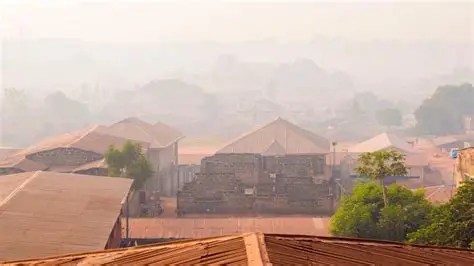
Amaka noticed it first in her throat. A persistent dryness that no amount of water seemed to fix. Then the cough started — her children’s first, then hers. By mid-January, three of the four family members in her Kaduna home were visiting the pharmacy for cough syrup and eye drops. Her youngest had a nosebleed that frightened everyone until the pharmacist said, simply: it’s the harmattan.
She had lived through many harmattan seasons. But this one felt sharper. The dust thicker. The cold more biting. She wondered, as she rinsed her children’s eyes with clean water every evening, whether harmattan was getting worse — or whether she was just paying more attention.
What the Harmattan Is — and Where It Comes From
The harmattan is a dry, dust-laden northeast trade wind that blows from the Sahara Desert across West Africa between November and March. It originates from high-pressure systems over the Sahara — south of Algeria and Libya, north of Mauritania, Mali, Niger, and Chad — and sweeps southward, carrying with it massive quantities of fine mineral dust: quartz, clay, fine mica flakes, and biological particles that have been lifted from the desert floor.
By December, nearly all of West Africa falls under its influence. In northern Nigeria, temperatures can fall below 10°C at night while daytime humidity drops to as low as 15% — conditions that simultaneously chill and dessicate, stressing the human body in multiple ways.
The harmattan’s effects are not merely atmospheric. They reach into the air you breathe, the water in your environment, and directly into your health.
What It Does to the Air
Harmattan dust is not the same as ordinary household dust. It is a complex mixture of fine and coarse particulate matter — PM2.5 and PM10 — that carries mineral particles and, critically, biological material including bacteria and fungal spores.
Harmattan dust carries and facilitates the spread of several serious pathogens, including Mycobacterium tuberculosis (the bacterium responsible for tuberculosis) and meningococci, which cause bacterial meningitis — a disease particularly common in Nigeria’s Sahelian north during harmattan season.
The fine PM2.5 particles pose the greatest risk because they are small enough to penetrate deep into the lungs and enter the bloodstream. There has been a link of 15% increase in fine dust particle concentrations during recent harmattan seasons to a 24% increase in infant mortality — a staggering figure that underscores the seriousness of what feels like an annual inconvenience.
People with asthma, or other chronic respiratory conditions face acute risk during harmattan. Saharan dust events have been associated with increased emergency visits for asthma exacerbations, which is consistent with what Nigerian hospitals observe every dry season: a sharp rise in respiratory presentations from December through February.
When harmattan dust mixes with existing urban pollution — vehicle emissions, construction dust, industrial activity — the combined burden on air quality is significantly worse than either source alone.
What It Does to Water
Above the surface, the harmattan’s dehydrating effect accelerates evaporation from rivers, lakes, ponds, and open water containers. Asides causing significant surface water evaporation, harmattan also accelerates soil erosion, shrinking already stressed surface water bodies during the months when groundwater recharge has also stopped.
Dust-laden winds deposit particulate matter directly into open wells, uncovered water storage tanks, and surface water sources. This is a contamination pathway that is easy to overlook. You may boil water to kill bacteria, but dust deposited into an uncovered tank introduces particles, minerals, and biological material that change the water’s character. Open tanks and uncovered wells are particularly vulnerable.
The water table is falling throughout the harmattan season as recharge has ceased while abstraction continues. The dual pressure of declining availability and dust contamination of surface sources makes January one of the most water-stressed months of the Nigerian year.
What It Does to Your Health — A Systematic Picture
Beyond respiratory effects, the harmattan affects health through several interacting pathways.
Skin and mucous membranes. Humidity dropping to 15% or below causes rapid drying of exposed skin and mucous membranes — the nose, throat, lips, and eyes. Cracked lips and nosebleeds are common, particularly in children. The breakdown of the skin’s moisture barrier also reduces its effectiveness as a first line of defence against infection.
Eyes. Dust particles cause irritation, redness, and a foreign body sensation — significantly more pronounced in individuals with allergic eye conditions. Eye infections are more common during harmattan as dust introduces irritants and pathogens into the eyes.
Sickle cell disease. The dry, cold harmattan air has been identified as a trigger for sickle cell crises, as cold temperatures and low oxygen saturation in dusty conditions promote sickling of red blood cells. For the estimated 150,000 Nigerians born with sickle cell disease each year, harmattan is a medically significant season.
Meningitis. The “meningitis belt” of sub-Saharan Africa — which includes Nigeria’s northwest and northeast — sees its most severe outbreaks during the harmattan season, when dry air compromises the mucosal membranes of the nasopharynx, making it easier for meningococcal bacteria to invade.
Protecting Yourself — Practically
The harmattan is not preventable. But its health impacts can be significantly reduced with deliberate measures.
Cover your nose and mouth during outdoor activity, particularly in the early morning hours when dust concentrations are highest. This is especially important for children, the elderly, and anyone with asthma or chronic respiratory conditions.
Keep your home’s doors and windows partially closed during peak dust hours, and dampen floors or outdoor surfaces periodically — wet ground reduces dust resuspension.
Drink more water than you think you need. The harmattan’s dehydrating effect accelerates fluid loss through breathing and skin evaporation even when you do not feel thirsty. Dehydration during harmattan is subtle and common.
Cover all water storage containers tightly. The same wind carrying dust across your city is depositing it into any open surface it finds — including your water tank.
For those with asthma, ensure rescue medication is accessible and consider temporarily increasing preventive medication dosage with your doctor’s guidance during peak harmattan months.

 Jay water advisory
Leave a comment