Author: Jesutofunmi Aladekomo

  • When the Wells Run Dry: Groundwater Abstraction and the Crisis Ahead

    When the Wells Run Dry: Groundwater Abstraction and the Crisis Ahead

    There is water beneath your feet right now. Deep in the earth, stored in layers of rock and sediment built up over thousands of years, sits one of humanity’s most critical resources — groundwater. For billions of people across the world, it is the water that comes out of the tap, irrigates food, and keeps industries running.

    And we are pulling it out far faster than the earth can put it back.

    The Invisible Drain

    Groundwater abstraction simply means pumping water out of underground reservoirs called aquifers. It sounds harmless enough. What most people don’t realise is that many of these aquifers took centuries — sometimes millennia — to fill. When we drain them faster than rainfall can recharge them, we are spending a savings account that took nature thousands of years to build.

    A landmark study published in Nature (Jasechko et al., 2024), analysing over 170,000 monitoring wells across 1,693 aquifer systems worldwide, found that groundwater levels have accelerated in their decline over the past four decades in 30% of the world’s regional aquifers. An earlier study by Wada et al. found that global groundwater depletion more than doubled between 1960 and 2000, driven primarily by rising water demand.

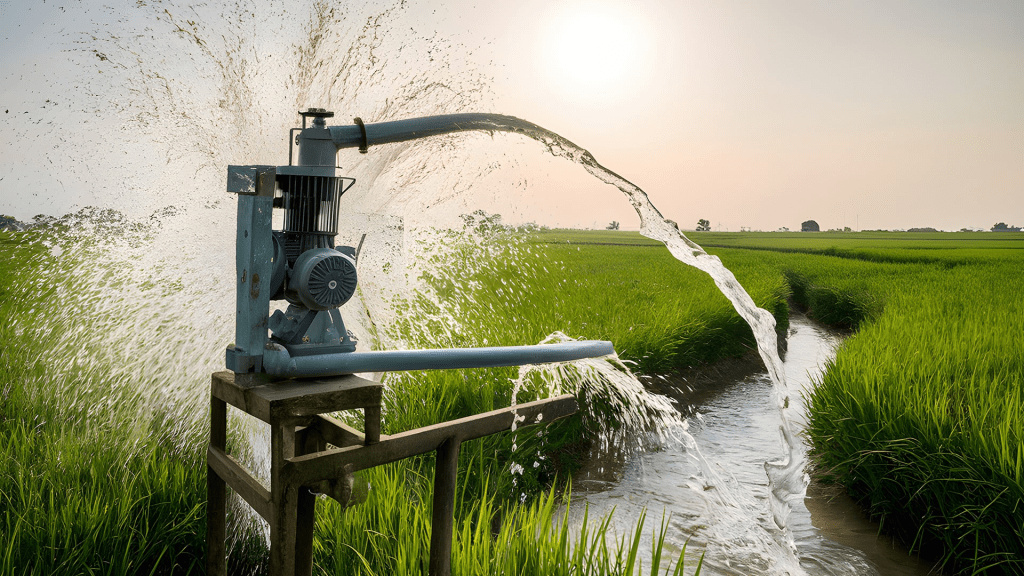
    Agriculture is the biggest driver. According to the UN’s World Water Development Report, agriculture accounts for roughly 70% of all freshwater withdrawals worldwide. Add rapid urbanisation, population growth, and increasing industrial demand, and you have a recipe for a slow-moving catastrophe.

    Bello’s Farm

    Picture Bello, a rice farmer in a rural community. Twenty years ago, his grandfather dug a well about 15 metres deep and always found water. Bello now drills at 60 metres — and in the dry season, even that runs low.

    His neighbours have done the same. So have the large commercial farms upstream. Everyone is drilling deeper, competing for the same shrinking reserve beneath the ground. No one planned this. No one coordinated it. It simply happened — one pump at a time.

    This is not a fictional scenario. Versions of Bello’s story are playing out across Sub-Saharan Africa, South Asia, the Middle East, and even parts of the United States and Europe today — as the UC Santa Barbara research team noted, with depletion accelerating fastest in dry regions with extensive croplands.

    What Happens When the Aquifer Runs Low?

    The consequences go well beyond thirsty taps.

    Food insecurity. Groundwater-dependent agriculture feeds a significant portion of the world’s population. As water tables fall, crop yields drop and food prices rise — hitting the poorest communities hardest.

    Land subsidence. When underground water is removed, the earth above can sink. Research published in Geophysical Research Letters has confirmed measurable groundwater-linked land subsidence in cities including Mexico City, Jakarta, and Lagos. A separate study in Nature Cities found that at least 20% of urban areas in the 28 most populous US cities are already sinking, mainly due to groundwater extraction. Infrastructure cracks. Buildings tilt. Floods worsen because the land no longer sits at the same elevation it once did.

    Saltwater intrusion. In coastal areas, when freshwater aquifers are depleted, seawater seeps in to fill the gap — permanently contaminating what was once drinkable water. This is already being observed along coastlines across West Africa, South and Southeast Asia, and the Mediterranean.

    Conflicts over water. Scarcity breeds competition. Communities, farmers, and nations that share aquifer systems are increasingly in tension. Water conflicts that once seemed distant are becoming real policy emergencies.

    A City Running on Borrowed Time

    Consider what happened in Chennai, India, in 2019. One of India’s largest cities, home to over 10 million people, declared “Day Zero” on 19 June 2019 — the day when all four of its main reservoirs had run completely dry. Residents waited in long queues for government water tankers. Businesses and hotels shut down. Families in slums received as little as 30 litres of water per day.

    As the World Resources Institute reported, the crisis was not simply about one bad monsoon. Rapid urbanisation had paved over wetlands that once allowed rainwater to percolate and recharge the aquifer naturally. Unregulated borewell drilling had depleted groundwater reserves over many years. The city did not suddenly stop receiving rainfall — the crisis was years in the making.

    Chennai has since made progress. But the warning it sent to the world was stark: groundwater depletion does not announce itself until it is almost too late.

    The Compounding Effect in the Next Decade

    Here is what makes the coming decade particularly concerning — the effects will not stay separate. They will compound.

    Climate change is already making rainfall less predictable. As wet seasons become less reliable, more people will turn to groundwater to compensate. This increases abstraction pressure at the exact moment that aquifer recharge is slowing due to shifting rainfall patterns. The UCSB study found that 90% of aquifers where declines were accelerating are located in places that have gotten drier over the last 40 years — a direct link between climate stress and groundwater loss.

    At the same time, global population is still growing. Urban expansion is paving over land that once allowed rainwater to percolate down and recharge aquifers naturally. Deforestation removes the vegetation that regulates the water cycle.

    Each of these pressures alone would be manageable. Together, they create a feedback loop: less recharge, more demand, deeper drilling, faster depletion, greater scarcity — which drives even more extraction. Excessive groundwater extraction is projected to impact 19% of the global population by 2040, according to the World Economic Forum.

    So What Can Be Done?

    The good news is that this is not inevitable. Communities, governments, and individuals are already showing what is possible.

    • Rainwater harvesting at household and community scale can reduce dependence on groundwater significantly — and it was one of the key recommendations for Chennai after its 2019 crisis.
    • Drip irrigation and water-efficient farming methods can cut agricultural water use by up to 50% without reducing yields, according to MIT engineers and multiple field studies.
    • Groundwater monitoring and regulation — knowing how much is being taken out and by whom — is essential to managing shared aquifers fairly. Bangkok halted its severe subsidence by strictly regulating groundwater pumping and investing in alternative water sources.
    • Treating and reusing wastewater reduces the pressure to extract fresh water in the first place.
    • Protecting recharge zones — forests, wetlands, and open land — keeps natural replenishment working.

    None of these solutions require waiting for technology that does not yet exist. They require political will, community action, and a genuine recognition that groundwater is not an infinite resource.

    Conclusion

    Water beneath the ground is like money in a joint bank account shared by an entire generation. Every litre extracted today is a litre unavailable tomorrow — and the account statements are rarely read until the balance hits zero.

    The wells are not dry yet. But if the patterns of the last forty years continue unchecked, many of them will be within our lifetime. The time to act is while there is still water in the ground to protect.


  • Water Safety During the Festive Season: What Nigerian Households Should Know

    Water Safety During the Festive Season: What Nigerian Households Should Know

    December in Nigeria means celebrations, full houses, more mouths to feed — and more water used than any other month of the year. What most households don’t plan for is that their water sources are simultaneously at their most stressed.

    The harmattan is deepening. Water tables are lower. Boreholes that were already struggling in November are working harder. And now you are hosting.

    Here is what to know and do before the festivities begin.

    Your Water Demand Just Multiplied

    A household that normally uses water for four people may be accommodating ten or fifteen over the Christmas and New Year period. Cooking, bathing, toilet flushing, washing up — every task uses more water, more frequently. A borehole that marginally kept up with normal demand can fail completely under festive pressure.

    Prepare early. Fill overhead tanks and any available storage containers before guests arrive. October and November rains may be over, but water stored before the demand spikes is water you will not have to scramble for mid-December.

    Food Safety and Water Are Inseparable

    The most common cause of illness after large celebrations is not spoiled food — it is water used in food preparation that was not adequately clean. Water used to rinse vegetables, make drinks, wash hands, and cook is as important as the food itself.

    Approximately 41% of tap water from Nigerian urban utilities contains detectable levels of coliform bacteria. Borehole water quality also varies significantly. During the festive season, when demand surges and storage containers are refilled more frequently, the risk of contamination at the point of use increases.

    Boil water used for drinking, making drinks, and rinsing food that will not be cooked further. This is especially important if children or elderly guests are present — they are the most vulnerable to waterborne illness.

    Storage Safety

    Increased demand means more water stored in more containers. Poorly covered or infrequently cleaned containers introduce contamination that treatment at the source cannot protect against. As covered in our flood water safety guide, water that is safe at source can become unsafe through poor handling.

    Keep storage containers covered at all times. Do not dip hands or cups directly into stored water — use a clean ladle or tap. Wash and dry containers before refilling them.

    A Quick Festive Season Water Checklist

    • Fill overhead tanks and reserve containers before guests arrive
    • Boil all water used for drinking, cooking drinks, and food rinsing
    • Inspect borehole pump pressure — address issues before demand peaks
    • Keep all storage containers tightly covered
    • Have a backup water source identified — a neighbour, a vendor, a community tap

    The celebrations should be memorable for the right reasons. A little water preparation beforehand makes all the difference.

    Jay Water Advisory wishes all readers a safe and well-hydrated festive season.

  • Living a zero-waste lifestyle without feeling overwhelmed

    Living a zero-waste lifestyle without feeling overwhelmed

    A man putting fruit into a reusable bag in a fruit mamrket
    Unsplash

    The phrase “zero waste” can feel like a tall order. Images of influencers fitting an entire year’s worth of rubbish into a single mason jar flood social media — and if that’s the benchmark, most of us would quit before we even started.

    But here is the truth: zero waste was never meant to be about perfection. It is about intention. Small, deliberate changes that, when multiplied across millions of households, add up to something genuinely significant.

    Why It Matters — Especially Here

    Nigeria generates at least 32 million tonnes of solid waste every year, according to the World Bank — a figure projected to rise to 107 million tonnes by 2050. Yet less than 30% of that waste is collected and properly managed. The rest ends up in open dumps, gutters, waterways, and burned in the open air — contaminating the same water sources communities depend on for drinking and farming.

    Globally, the picture isn’t much better. The UN Environment Programme projects that municipal solid waste generation will grow from 2.1 billion tonnes in 2023 to 3.8 billion tonnes by 2050 — nearly doubling within three decades. And the cost of ignoring this isn’t just environmental. The global direct cost of waste mismanagement in 2020 was an estimated $252 billion — rising to $361 billion when the hidden costs of pollution, poor health, and climate damage are factored in.

    The good news? It was predicted that widespread adoption of zero-waste practices could cut global greenhouse gas emissions by up to 25% by 2040 — roughly 1.6 billion tonnes of CO₂-equivalent annually. Individual action, it turns out, is not small at all.

    Meet Adeola

    Adeola is 400 level student studying biochemistry in Obafemi Awolowo University. She barely has time to cook due to her hectic schedule and lab work. She lived quite comfortable enough to buy food with proper packaging, at least that’s what her roommates are doing. She noticed one Wednesday that the trash basket in front of her room was more than half way filled. It was 2pm on a public holiday so everyone was around. She examined the trash and saw that a good amount of the trash was dumped by her.

    That day, she thought about the compound effects of her actions and decided to try something different. Not a dramatic lifestyle overhaul. Just one swap per week.

    Week one: she stopped collecting extra polythene bags when she bought her snacks and put them directly inside her tote bag instead. Week two: she got more intentional about cooking her own afterall, they were healthier and she could eat them twice. Week three: she bought a refillable water bottle and left it at an obvious spot on her table so she’d never leave her room without it.

    Half way into her second semester, Adeola saw that even at the second day for the two days public holiday they had, their trash bin wasn’t half yet and it was almost evening. She hadn’t joined a movement or bought expensive items to act sustainable. She had just made small decisions, one at a time, until they stopped feeling like decisions at all.

    This is what a zero-waste lifestyle actually looks like in practice.

    The 5 R’s — A Framework That Actually Works

    Before jumping into specific tips, it helps to understand the thinking behind zero waste. The most practical framework is the 5 R’s, in order of priority:

    1. Refuse — Simply say no to things you don’t need. The free pen at the conference, the extra straw, the plastic bag for one item. Refusing is the most powerful act in zero waste because it prevents the problem entirely.

    2. Reduce — Buy less. Use less. Plan meals so food doesn’t go to waste. Choose quality items that last over cheap ones that don’t. This applies to everything from food to clothing to electronics.

    3. Reuse — Before discarding anything, ask: can this be used again? Glass jars become storage containers. Old newspapers wrap breakables. Worn clothing becomes cleaning rags. Reusing extends the life of what already exists.

    4. Recycle — When refusing, reducing, and reusing aren’t possible, recycle. In Nigeria, informal waste pickers and local recyclers are often the most accessible route for plastics, metals, and paper.

    5. Rot — Composting organic waste (food scraps, vegetable peels) turns what would otherwise go to a landfill into nutrient-rich material for gardens and farms. It is one of the most impactful things a household can do.

    The order matters. Recycling feels virtuous but it is near the bottom of the list — because it still requires energy and resources. Refusing and reducing are always better than recycling.

    Practical Swaps for a Nigerian Household

    Zero waste does not require expensive products or perfect infrastructure. Most of the most impactful changes are also the cheapest:

    In the kitchen:

    • Use a market bag (Ghana-must-go, canvas tote, or basket) instead of collecting polythene bags every time you shop.
    • Buy in bulk where possible — grains, beans, and groundnuts from open markets produce far less packaging waste than pre-packaged equivalents.
    • Store food properly to reduce spoilage. Covering bowls with plates instead of plastic wrap, and using airtight containers, dramatically reduces food waste.
    • Compost vegetable peels and food scraps rather than throwing them in the bin — even a small bucket outside works as a simple compost system.

    Around the house:

    • Replace single-use plastic bottles with a reusable water bottle or flask. One good bottle eliminates hundreds of sachets and bottles per year.
    • When appliances or household items break, repair before replacing. A cobbler, tailor, or local electrician can often fix what would otherwise become waste.
    • Buy second-hand where possible — clothes, books, and furniture from Kantamanto-style markets or online platforms keep good items in use and out of landfills.

    At work and on the go:

    • Carry your own cutlery if you eat out frequently. Avoiding plastic spoons and forks daily adds up quickly.
    • Choose digital over paper wherever practical — receipts, documents, and notes.
    • Decline freebies you won’t use. Every item brought home eventually becomes waste.

    What About When the System Doesn’t Help?

    One of the most common frustrations with zero waste in Nigeria is the lack of formal recycling infrastructure. Unlike countries where recyclables are sorted and collected door-to-door, most Nigerian communities have no such system. And that is a real barrier — not an excuse, but a genuine structural challenge.

    Here is how to work around it:

    • Informal recyclers — known locally as “scavengers” — collect plastic, metal, and paper that can be sold. Setting aside these items separately makes it easier for them to collect what has value and reduces what goes to dumpsites.
    • Aggregator programmes — organisations like Wecyclers and RecyclePoints in Lagos allow residents to earn points or cash for sorted recyclables. Search for equivalents in your city.
    • Community action — even a simple neighbourhood agreement to reduce open burning of waste or illegal dumping in drains makes a measurable difference to local water and air quality.

    The system is imperfect. Your individual effort is still worth making.

    The Mistake Most People Make

    The biggest reason people quit zero waste early is trying to change everything at once. They throw out all their plastic, buy new eco-friendly alternatives, reorganise their entire kitchen — and within two weeks, they are exhausted and back to old habits.

    A more sustainable approach is slower. Pick one area of your life, make one change, and let it become normal before moving to the next. Adeola didn’t overhaul her life in a weekend. She changed one thing per week. That is the pace that sticks.

    Progress over perfection. Always.

    Conclusion

    Zero waste is not about living in a minimalist flat with a single linen tote and a bamboo toothbrush. It is about reducing the gap between how much we consume and how much the earth can absorb. In Nigeria, where waste ends up in our waterways, our farmland, and the air we breathe, that gap has real consequences for real people.

    Every refused polythene bag, every repaired appliance, every compost bucket is a small but deliberate vote for a different kind of future. And those votes add up — one household, one community, one city at a time.

    You don’t have to be perfect. You just have to start.

  • Why Your Borehole Runs Dry in the Harmattan — and What to Do About It

    Why Your Borehole Runs Dry in the Harmattan — and What to Do About It

    Every year, as the last of October’s rains fade and the skies turn hazy, the same complaint begins to circulate across some Nigerian neighbourhoods “the borehole is running low” or “the well is running low”. The pressure is dropping. Some mornings, nothing comes out at all.

    This is not a coincidence. It is not a mechanical failure. And it is not unique to your compound. It is a predictable, seasonal phenomenon driven by the physics of how groundwater moves through the earth — and understanding it is the first step to managing it.

    What the Harmattan Actually Does Underground

    The harmattan is a northeast trade wind that blows from the Sahara Desert across West Africa between November and March. Above ground, its effects are familiar to every Nigerian — dry skin, hazy skies, cracked lips, and cold mornings. But the harmattan’s impact does not stop at the surface.

    Beneath the ground, the harmattan season marks the end of aquifer recharge. Throughout the rainy season — April to October — rainfall percolates down through soil and rock, gradually replenishing the underground water stores called aquifers. This is the process that fills your borehole.

    When the rains stop, recharge stops. The aquifer is no longer being topped up. But abstraction — pumping — continues. Every household, every commercial building, every farm that draws from the same underground reservoir keeps pulling water out while nothing goes in.

    Water table levels drop seasonally during dry periods, and this is particularly acute for basement aquifers — the type most commonly found across central, southwestern, and northern Nigeria. In northern Nigeria specifically, the water table can drop so significantly during the dry season that boreholes drilled to depths adequate during the rainy season become effectively dry by February.

    This is the basics of what you experience every harmattan: your borehole is not broken — the water table has simply fallen below the pump intake level.

    Why Some Boreholes Are More Vulnerable Than Others

    Not all boreholes experience the same degree of harmattan stress. Several factors determine how badly yours will be affected.

    Depth of drilling. The deeper a borehole, the more insulated it is from seasonal water table fluctuations. Shallow boreholes drilled to 20–40 metres are far more vulnerable to dry season depletion than deeper ones reaching 60–100 metres or beyond. If your borehole was drilled to the minimum viable depth during the rainy season when water was plentiful and easy to find, it may struggle significantly during the harmattan periods.

    The underlying geology. Nigeria sits on different geological formations depending on location. Basement complex rocks — common across Oyo, Ekiti, Osun, Kwara, Niger, and large parts of the north — form aquifers with relatively limited storage capacity concentrated in fractures and weathered zones. These aquifers recharge well during the rains but deplete faster during the dry season. Sedimentary aquifers in the south — Lagos, Delta, Rivers — tend to have higher storage and are somewhat more resilient, though urban over-abstraction is a significant pressure there.

    How many boreholes share the same aquifer. This is the hidden compounding factor. When an entire neighbourhood drills into the same aquifer system — each borehole pumping independently, with no coordination — the collective demand can outpace the aquifer’s ability to sustain all of them through the dry months. As the population grows without a corresponding increase in water supply infrastructure, borehole dependence intensifies, and dry season shortages become more severe.

    The condition of the pump and casing. A well-sealed borehole casing prevents surface water from infiltrating and protects the pump. Worn or poorly maintained pump components reduce efficiency, meaning the pump works harder to lift water from a falling water table — and may appear to run dry even when some water remains below.

    The Signs Your Borehole Is Under Harmattan Stress

    Recognising the signs early allows you to manage the situation rather than be caught off guard.

    The most common indicator is reduced flow rate — water that once flowed at strong pressure begins trickling. This happens as the water table drops and the pump draws with increasing effort. You may also notice the pump running noisily or cycling on and off rapidly, which indicates it is struggling to sustain suction. In severe cases, the pump begins pulling air, producing a sputtering discharge, before eventually losing prime entirely.

    Increased turbidity — a slight cloudiness or change in taste — can also indicate that the water table has dropped to the point where the pump is drawing from the lower, more mineralised or sediment-rich layers of the aquifer. This is not necessarily dangerous, but it is a signal that the system is under stress.

    What You Can Do — Before, During, and After Harmattan

    Before harmattan begins (September to October):

    Store treated water during October — the final month of the rainy season. Large overhead tanks or ground-level storage tanks filled during this period provide a buffer for the first and worst weeks of dry season decline. This is also the ideal time to have your borehole serviced: check the pump impeller, inspect the casing seal, and have a technician confirm the static water level.

    During harmattan (November to March):

    Reduce unnecessary abstraction. Identify high-volume uses — car washing, excessive garden watering, filling swimming pools — and either eliminate or reduce them during peak dry season. The less water drawn from a stressed aquifer, the slower the water table falls.

    Space out pumping sessions rather than running continuously. Giving the aquifer brief recovery periods between pumping cycles can make a meaningful difference, particularly for basement aquifers with limited transmissivity.

    If your pump loses prime and stops delivering water, do not run it dry — this damages the motor and impeller significantly. Switch it off and allow several hours before attempting to restart.

    Boreholes that go completely dry:

    If your borehole fails entirely during harmattan, do not assume it is permanently damaged. In the majority of cases, seasonal dry boreholes recover once rains return and recharge the aquifer. Wait until at least mid-April before concluding that rehabilitation is needed. If the borehole fails to recover after the first significant rains, then professional assessment is warranted — it may require deepening or rehabilitation.

    Planning for the next cycle:

    If harmattan failure is a recurring problem, the medium-term solution is deeper drilling. A borehole that reaches below the seasonal fluctuation zone — typically 60 metres or more in basement areas — is far less likely to be affected by dry season water table decline. Rainwater harvesting during the rainy season is also a valuable complement, significantly reducing dry-season borehole dependence.

    The Broader Picture

    The harmattan borehole problem is ultimately a symptom of a larger issue: groundwater is being abstracted faster than it is being replenished, and the dry season is when that imbalance becomes impossible to ignore. The challenge is not the absence of water — it is the mismatch between how fast we take it and how fast the earth can give it back.

    Preparing for harmattan is not just about surviving the dry season. It is about developing a relationship with your water source that acknowledges its limits — and plans around them.

Design a site like this with WordPress.com
Get started