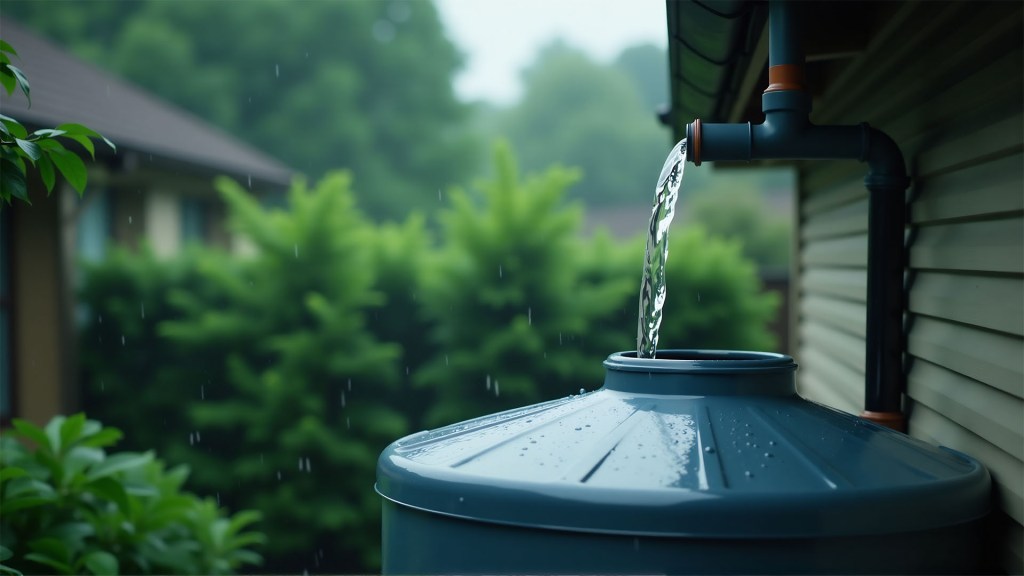
February experiences one of the deepest points of Nigeria’s dry season. Boreholes are strained. Water vendors are in high demand. The harmattan is still blowing though we’ve felt nothing this year. And yet, in just six to eight weeks, the rains will begin their return and with them, one of the most underused water resources available to Nigerian households — the rain falling directly onto your roof.
Rainwater harvesting is the practice of collecting and storing rainfall before it runs off into the ground or drains away. It is ancient in concept and modern in its most efficient applications, and it is one of the most practical, affordable, and genuinely impactful steps any Nigerian household can take toward water security. This guide explains the system, its components, its limitations, and how to set one up in a Nigerian context.
Why Rainwater Harvesting Makes Particular Sense in Nigeria
Nigeria receives generous rainfall — particularly in the south, where annual averages range from 1,500mm to over 3,000mm in the coastal zones, and even the drier north receives 500–1,000mm annually in meaningful seasonal patterns.
Harvested rainwater in cities like Abeokuta could satisfy monthly household demand for toilet flushing and laundry for most of the year — with surplus from the wet season sufficient to carry households through the early dry months, provided storage is adequate.
The implications are significant. Reducing borehole demand and giving it sufficient time to recharge during the rainy season directly extends the life and reliability of your groundwater source. Every litre saved from the aquifer is a litre that contributes to long-term water security.
Rainwater harvesting reduces household water expenditure, cuts the cost burden on municipal water infrastructure, and reduces the volume of stormwater runoff that contributes to urban flooding, which could result in water contamination.
Understanding the System — Component by Component
A household rainwater harvesting system consists of five essential components working in sequence. Understanding each one is key to building a system that actually works.
1. The Catchment Surface
This is where collection begins — most commonly your rooftop. The size and material of your roof directly determine how much water you can collect. A simple formula you can use to determine how much water you collect in litres is catchment area (in square metres) multiplied by rainfall depth (in millimetres). A loss factor of approximately 0.75–0.85 can be used to account for evaporation, splashing, and inefficiencies.
For a typical Nigerian home with a 100 square metre roof in Lagos, receiving 1,800mm of annual rainfall, the theoretical harvest is approximately 135,000–153,000 litres per year. That is a substantial resource.
Metal (zinc) roofing is the most common material in Nigeria and is generally well-suited for rainwater collection. Tiled or concrete roofs also work. Roofs treated with certain chemical coatings or paints should be avoided for drinking water catchment. Keep roofs clear of leaves, debris, and bird droppings to minimise contamination at the source.
2. The Conveyance System
Gutters and downpipes channel water from the roof to the storage or treatment point. Gutters should be properly sloped to direct water efficiently without pooling at any point. Standing water in gutters becomes a mosquito breeding site. Also, install mesh screens or guards at gutters and downpipe inlets to prevent leaves, insects, and large debris from entering the system. Ensure all joints within the conveyance system are sealed to prevent leakages and that downpipes are securely fastened to the wall.
3. The First Flush Diverter
This is the most important quality component in the system, and the one most commonly omitted — a mistake that degrades the entire harvest.
The first flush diverter is a simple mechanism that automatically diverts the initial flow of rainwater — the first 5–20 litres depending on system size — away from the storage tank. This first flush is the dirtiest water in any rainfall event. It washes accumulated dust, bird droppings, atmospheric pollutants, and debris off your roof before the cleaner water follows. A first flush diverter allows this contaminated initial runoff to discharge harmlessly to the ground while automatically switching to fill the tank once the rooftop has been adequately washed.
In the Nigerian context, where harmattan deposits months of dust onto rooftops between rainy seasons, the first flush at the beginning of the rains is especially important. The first significant rain of April carries an enormous load of accumulated contaminants — none of which you want in your storage tank.
First flush diverters can be purchased at plumbing suppliers or fabricated locally from PVC pipe. A simple DIY version uses a vertical standpipe connected to the downpipe — when it fills with the first flush volume, the ball float inside rises and seals the entry, diverting subsequent cleaner water to the tank.
4. The Storage Tank
The tank is the heart of the system. Its size determines how long your harvest can sustain household needs during dry periods — too small and it overflows during the rains without capturing the full potential; too large and the investment is unnecessary.
Tanks of 5,000–10,000 litres is sufficient for rainwater harvesting for non-potable purposes (flushing, laundry, garden) in households in Southern Nigeria. For potable use or larger families, 10,000–20,000 litres provides better security through the dry months.
Tank materials in Nigeria include polyethylene (HDPE plastic tanks — the most common and practical option), reinforced concrete, and ferrocement. HDPE tanks are durable, opaque, and widely available. Opacity is important: light penetration into the tank promotes algae growth.
The tank must be placed on a firm, level concrete foundation and fitted with a secure, tight-fitting lid to exclude insects, light, and external contamination. Install an overflow pipe to direct excess water safely away from your building’s foundation. A draw-off pipe positioned approximately 10–15 centimetres above the tank floor prevents the bottom sediment layer from being drawn into use.
5. Filtration and Treatment
For non-potable uses (garden irrigation, toilet flushing, car washing, laundry) basic mesh filtration at the gutter and first flush diversion is typically sufficient, particularly for relatively clean catchment surfaces.
For potable uses (drinking and cooking), additional treatment is essential. Rainwater is soft and naturally low in minerals, which is an advantage, but it can carry biological contamination from rooftop sources. A simple treatment train for potable rainwater includes coarse mesh filtration (removes debris), slow sand filtration or activated carbon filtration (removes fine particles and some chemical contaminants), and chlorination or UV disinfection (kills pathogens). Regular testing for bacterial quality — at least at the start of each rainy season — is strongly recommended before using harvested rainwater for drinking.
Maintenance — What You Must Do Regularly
A neglected rainwater system is a water quality risk. The following routine maintains system performance and water safety.
Clean gutters and mesh screens at the start of every rainy season and at least once mid-season. During harmattan, debris accumulates rapidly — a blocked gutter defeats the entire system.
- Flush the first flush diverter at the beginning of each rainfall season to ensure it is functioning.
- Clean the inside of the storage tank annually — drain it completely, scrub the interior with a dilute bleach solution, rinse thoroughly, and refill.
- Inspect all pipe joints, the tank lid, and the overflow pipe for damage or gaps every six months.
Realistic Expectations
Rainwater harvesting is not a replacement for your borehole or other water source — it is a complement. In Nigeria’s climate, it provides the most value as a secondary supply that reduces pressure on primary sources during the peak dry season and supplements supply during the rains when storage is actively building.
Set expectations based on your household size, roof area, and how you intend to use the water. Start modestly — even a 1,000-litre tank on a small roof can meaningfully extend your household’s water resilience. Scale up based on what you learn.
The investment is far smaller than most people assume. A basic system with guttering, a first flush diverter, and a 5,000-litre HDPE tank can be set up for a fraction of the annual cost of buying water from vendors — and it pays for itself within one or two rainy seasons.
In February, when you look out see the harmattan skies, that is exactly the right time to plan. By April, the rains will come. Whether they fill your tank or simply drain away is a choice you make now.

 Jay water advisory
Leave a comment