By Jay Water Advisory
The day you break ground on your plot is a proud one. Concrete is poured. Blocks go up. The compound gets cemented. A zinc roof catches the sun. You have built something lasting.
But beneath that foundation, something else is happening, quietly, invisibly, and with consequences that show up not in your walls but in your borehole.
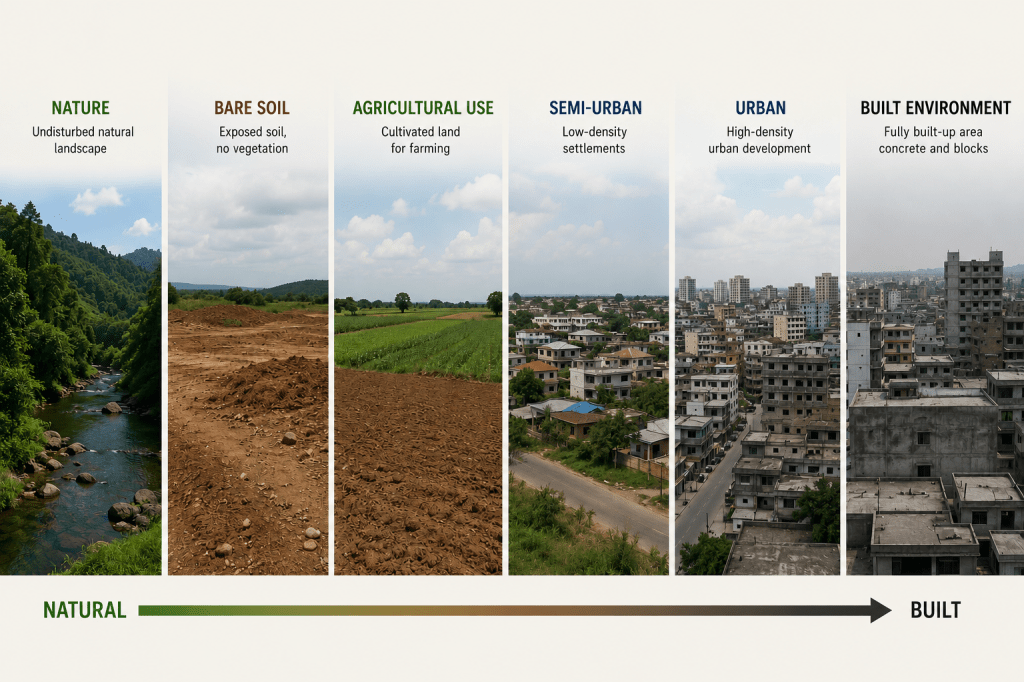
The bare ground was doing something before you built.
Natural soil is not just dirt. It is a living, breathing system that performs one of the most critical functions in your water supply — it absorbs rainfall and filters it slowly downward into the underground aquifers that your borehole draws from.
This process is called groundwater recharge, and it depends entirely on the soil surface remaining open and permeable. Every tree, every patch of grass, every uncemented stretch of ground in your neighbourhood is quietly channelling rainfall downward, replenishing the underground reserves that a lot of communities across Nigeria depend on.
When you lay a concrete floor in a compound or cover open ground with blocks and paving stones, that recharge pathway closes. Rain that once soaked in now runs off. Research modelling groundwater recharge in Nigerian cities found that as urban surfaces expanded, recharge rates in southwest Nigeria varied from near zero in dry months to significant levels in August when soils were at field capacity (the soil was open and not cemented or covered with concrete or paving stones). Seal the soil, and that August recharge disappears entirely.
As urban land expanded from 807km² in 2000 to 1,183km² in 2020, simulated groundwater recharge dropped by 50% over those same 20 years. Half of the underground replenishment was gone in two decades of building.
This is not a Lagos-specific problem. It is what happens wherever soil gets sealed. And it connects directly to something many Nigerian households already experience — the borehole that ran fine for years and is now struggling.
It Also Changes the Temperature Around You
Open soil and vegetation cool their surroundings through a process called evapotranspiration. Plants and exposed ground release moisture into the air, which absorbs heat as it evaporates, lowering local temperatures naturally. Replace that soil with concrete, and the cooling stops.
Over time, a direct, positive relationship has been seen between the expansion of built-up areas and rising land surface temperatures. More concrete means more heat. Urbanisation leads to increased impervious surfaces, altered drainage patterns, and reduced green spaces, which intensifies local microclimates and amplifies the urban heat island effect.
Your compound is not just a private space. Its surface type contributes to the temperature of your immediate neighbourhood, the drainage of your street during rain, and the recharge rate of the shared aquifer beneath your entire community.
And It Makes Flooding Worse
When rainfall cannot percolate into sealed ground, it has to go somewhere. It runs off, faster, in larger volumes, carrying soil and pollutants with it, into drains, gutters, and eventually waterways. Urbanisation and land use changes lead to altered drainage patterns that intensify flooding vulnerability in communities across Nigeria.
The connection between a cemented compound and the flooded street three houses down is real, even if it is invisible. That floodwater carries faecal matter, chemicals, and pathogens directly into the wells and boreholes that the same community relies on. The building decision and the contamination event are connected by a chain most people never see.
What You Can Actually Do
None of this means you should not build or improve your property. It means making deliberate choices about how you use the land around the structure.
Leave portions of your compound unpaved. Even a strip of open soil along a fence line, a patch of grass at the entrance, or a garden bed along the wall maintains a recharge pathway. Land cover factors are among the key variables influencing groundwater potential in Nigeria and at the plot level, every square metre of open soil is contributing to that potential.
Plant something — anything. A tree, a shrub, a row of ugu in containers. Plants cool the air around them, filter pollutants, and maintain the soil’s ability to absorb water. They are doing environmental work every hour of every day without any effort from you after planting.
Use gravel or paving blocks with gaps instead of solid concrete for driveways and walkways where possible. Permeable surfaces allow some rainfall through while still giving you a usable, clean surface. It is a practical middle ground between fully open soil and fully sealed concrete.
Direct rooftop water into the ground, not the street. Rather than letting gutters drain onto the road, direct downpipes into a soakaway, a garden bed, or a rainwater storage tank. Rainwater harvesting is one of the most impactful and affordable steps any homeowner can take — capturing rain before it becomes runoff, and putting it back where it belongs or putting it to use.
Renters: use your outdoor space deliberately. You may not control what gets built or cemented, but you can add containers of plants, advocate to your landlord for an open strip of soil in the compound, and avoid adding to sealed surfaces. Your choices in a rented space still matter to the shared environment around you.
The Bigger Picture
Land use changes, including infrastructure development without consideration for climate resilience, contribute significantly to communities’ vulnerability to extreme weather events. That is not a description of government policy alone; it is a description of millions of individual building decisions made without understanding their collective consequence.
The soil under your house was, until you built on it, quietly doing three things simultaneously: cooling your neighbourhood, recharging your borehole, and reducing your flood risk. Understanding what it was doing — and finding ways to let it keep doing some of it — is one of the most practical environmental contributions any landowner or renter can make.
Your foundation is laid. What you do with the rest of the land is still a choice.
 Jay water advisory
Leave a comment