
By Jay Water Advisory
You wake up with a dry throat most mornings. Someone in the house has a cough that never quite goes away. The children seem to get sick more often than they should. You put it down to the weather, to stress, to “it’s just how things are.”
But what if your home itself is part of the problem?
Most Nigerians spend the majority of their time indoors — sleeping, cooking, relaxing, working from home. The quality of that indoor environment directly affects how well you sleep, how clearly you think, how often you fall ill, and how quickly you recover. Yet very few households ever stop to ask: what is my home actually doing to my body?
This is not a scare piece. It is a practical check — five areas of your home environment, what the risks look like in a typical Nigerian household, and what you can do about each one. Read through, be honest with yourself, and identify where your home needs attention.
Check 1 — The Air You Are Breathing Indoors
Here is something most people find genuinely surprising: the air inside a Nigerian home is often more polluted than the air outside it.
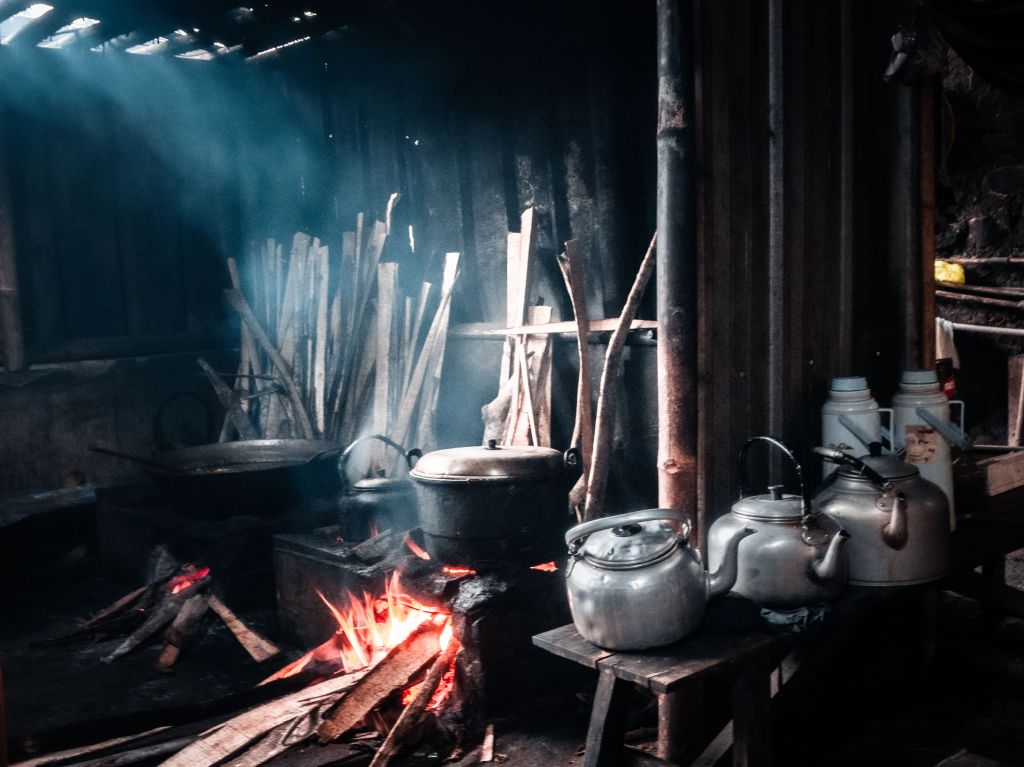
Approximately 70% of Nigerian households rely on solid fuels (firewood, charcoal, or kerosene) as their primary cooking fuel. These fuels release fine particulate matter, carbon monoxide, and carcinogenic compounds directly into enclosed kitchen and living spaces. Kerosene stoves produce PM2.5 concentrations 2 to 4 times higher than LPG stoves. PM2.5 particle size is small enough to enter your bloodstream directly through your lungs. In three-quarters of Nigerian households, solid fuels are burned in poorly ventilated dwellings, meaning the smoke has nowhere to go except into the lungs of whoever is cooking.
Generators compound the problem. A generator running near a window or in a poorly ventilated shed pushes carbon monoxide directly into the surrounding air. Carbon monoxide is odorless, meaning you cannot detect it without equipment, and at sufficient concentrations, it is fatal. At lower concentrations, chronic low-level exposure causes headaches, fatigue, and cognitive impairment that people routinely attribute to stress or tiredness.
Indoor fine particulate matter levels in many Nigerian homes surpass air quality guidelines by up to 20 times. Air pollution is not a problem confined to industrial areas or major cities. It happens in kitchens, bedrooms, and sitting rooms across the country every day.
Check your home: Do you cook in a space with cross-ventilation—windows on at least two sides or a window and an opposite outside door that can be open simultaneously while cooking? Is your generator positioned so its exhaust faces away from all windows and doors? If the answers are no, your indoor air quality is likely significantly worse than it needs to be.
What to do: Cook with windows and doors open on both sides of the kitchen to create airflow rather than just one opening. Switch from kerosene to LPG if at all possible; the air quality improvement is immediate and significant. Never run a generator within 3 metres of any window or door. If you use a kerosene lamp for lighting at night, replace it with a solar LED, kerosene lamps produce high concentrations of toxic emissions in enclosed spaces, and solar alternatives now cost less than a month’s kerosene budget for many households.
Check 2 — Your Water Source and How You Store It
This check is the one with the most immediate health consequences for Nigerian households. Water is the daily constant. You cook with it, clean with it, drink it, and give it to your children. If your water source is compromised, every one of those activities is a health exposure.
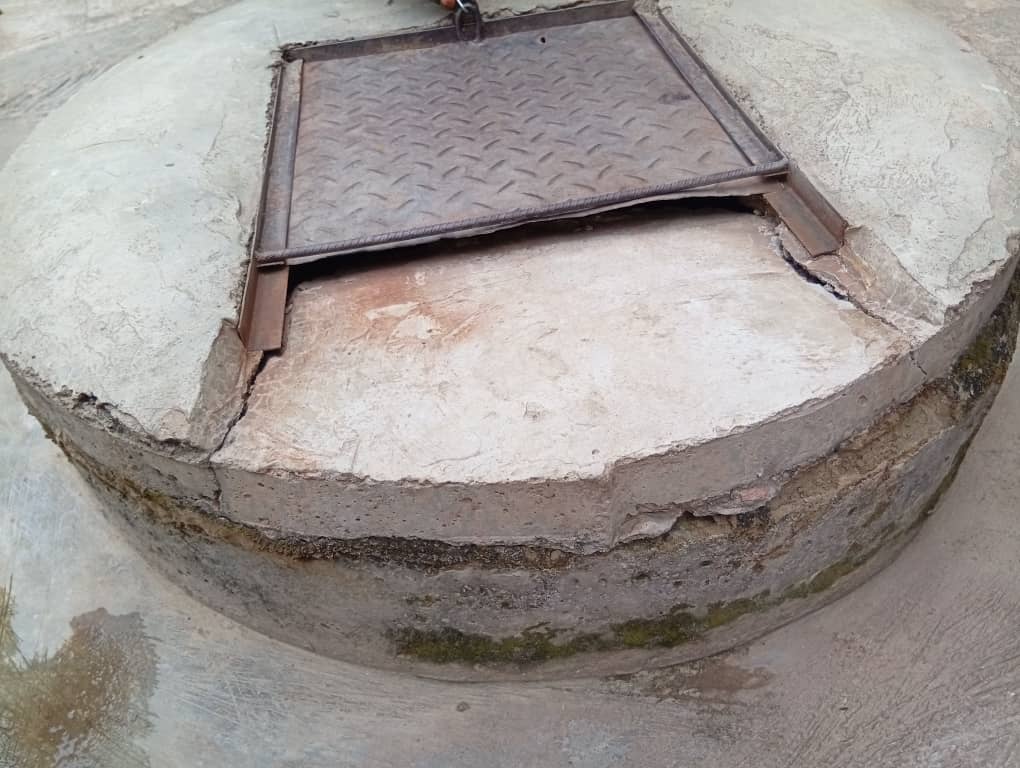
The majority of Nigerian households depend on groundwater, boreholes, and hand-dug wells, which can be easily contaminated with faecal bacteria, heavy metals, and chemical pollutants that are invisible, odourless, and tasteless. Your water can look completely clean and still carry typhoid, E.coli, or lead.
But the source is only half the problem. How you store water after drawing it matters just as much. Overhead tanks that are never cleaned, uncovered buckets, and containers dipped into with unwashed hands all introduce contamination into water that may have been safe when it left the borehole. After flooding, the risk multiplies significantly as surface contaminants enter groundwater through saturated soil.
Check your home: When did you last clean your overhead tank? Is your borehole cap tightly sealed? Is your borehole more than 30 metres from your soakaway pit? Do you boil water before drinking?
What to do: Clean your overhead tank 2-3 times a year. Drain it, scrub the interior, rinse, disinfect if needed then refill. Keep all water containers covered. Boil water used for drinking and cooking as standard practice. If you can afford it, have your borehole water tested at the start of each rainy season. A basic microbial test at an accredited laboratory tells you exactly what is in your water. And if the rains have just flooded your compound, follow the step-by-step post-flood water safety guide before using your borehole again.
Check 3 — What Your Compound Surface Is Doing to You and Your Neighbours
Walk out of your front door and look at the ground. How much of your compound is cemented, tiled, or paved — and how much is open soil?
This matters more than most people realise. Every square metre of cemented ground is a square metre that can no longer absorb rainfall and channel it down to the underground aquifer your borehole draws from. It is also a square metre that stores heat during the day and radiates it back out at night — directly contributing to the rising temperatures in Nigerian towns and cities that make sleeping without a fan increasingly difficult.
A fully cemented compound also means that heavy rain has nowhere to go except toward your neighbour and eventually into the drainage system. When that system is blocked with plastic waste, as it frequently is across Nigerian communities, the result is localised flooding that contaminates water sources and creates the waterborne disease conditions that follow every significant rainfall.
Check your home: What percentage of your compound is open ground, grass, or planted? Do you have any trees in or immediately around your compound? Where does rainwater go when it falls heavily?
What to do: Leave at least a portion of your compound as open soil — along a fence line, under a tree, or as a garden bed. If you are planning to cement an area used mainly as a driveway or walkway, consider interlocking paving blocks with gaps instead of solid concrete — they allow some water through while still giving you a usable surface. And if you do not yet have anything growing in your compound, start with one container of leafy vegetables, the benefits extend beyond food to air filtration and localised cooling.
Check 4 — How Your Household Manages Waste
Where does your household waste go? Be honest — not where it is supposed to go, but where it actually goes on the days the truck does not come, on the days the bin is full, on the days it is just easier to sweep it to the corner of the compound.
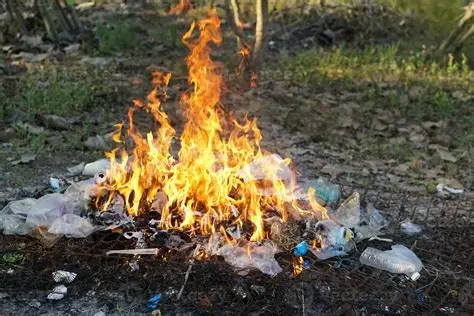
Open burning of household waste, a practice extremely common across Nigerian neighbourhoods, releases a cocktail of toxic compounds into the air immediately surrounding the homes of everyone nearby. Burnt plastic in particular produces dioxins and furans, which are persistent organic pollutants that accumulate in human tissue and have been linked to cancer, hormone disruption, and immune system damage. Plastic does not neutralise when burned, it transforms into something significantly more dangerous.
Waste that is not burned but dumped openly near drainage channels enters waterways during rain. This connects your household waste directly to the contamination of water bodies that communities downstream depend on. The path of hazardous waste from the household to the environment is shorter and more direct than most people appreciate.
Check your home: Does your household burn waste regularly? Where does waste go when collection fails? Do you separate anything, such as plastic, organic scraps, or paper, before disposal?
What to do: Never burn plastic. Separate it and store it until it can be properly collected or given to an informal recycler. Start a simple compost for vegetable peels and food scraps; a covered container outside is enough to begin. When formal collection fails, store waste in a sealed bag or container rather than burning or open dumping. Our zero-waste living guide has practical, Nigerian-specific steps for reducing the volume of waste your household produces in the first place.
Check 5 — The Noise and Stress Your Environment Is Creating
This last check is the one most people skip entirely because it is not visible, not measurable without equipment, and feels less urgent than water or air. But chronic environmental noise and stress have physical health consequences, and for many Nigerian households the noise environment is significantly beyond healthy levels.
Generator noise alone which is typically 70 to 90 decibels at close range, with prolonged exposure above 85 decibels causing progressive hearing damage, is a daily reality for millions of Nigerian households. Add traffic, neighbourhood noise, and the general acoustic density of densely populated urban and peri-urban areas, and many Nigerians are living in a persistent state of low-level auditory stress that disrupts sleep, raises blood pressure, and impairs concentration and learning, particularly in children.
The connection to the environment is direct; denser urban environments with less vegetation and more built infrastructure are louder, hotter, and more stressful to live in than their greener equivalents. Every tree planted, every generator hour reduced through solar alternatives, and every open strip of soil retained contributes to a calmer, healthier acoustic and thermal environment.
Check your home: Is your generator positioned as far as possible from sleeping areas? Do you or your children sleep near a consistent noise source? Is there any green space, even a potted plant, visible from the main living area of your home?
What to do: Position generators at the furthest point of the compound from sleeping rooms, with a barrier, such as a wall between the generator and the house if possible. Consider inverter batteries or solar alternatives that operate silently. Beyond improving the air quality, the noise reduction alone improves sleep quality significantly. And plant something anywhere you can, not just for the environment, but for your own sense of calm.
Your Score
Go back through the five checks. For each one where your household is doing well, give yourself a point. For each one where something needs attention, write down the single most manageable action from that section and commit to it this week.
You do not need to fix everything at once. The households that make the most lasting environmental improvements are not the ones that overhauled everything in a weekend — they are the ones that changed one thing, let it become normal, and then changed the next. That is the principle behind everything this blog advocates, and it is the only pace that actually works.
Your home should be the safest environment you enter each day. For many Nigerian households, it is not yet. But it can be, and the changes that make the biggest difference are almost always simpler than people expect.
Jay Water Advisory is committed to promoting sustainable water and environmental practices for communities across Nigeria and beyond.
 Jay water advisory
Leave a comment