By Jay Water Advisory
Trees are usually talked about for shade, fruit, or fresh air. Rarely for water. But the connection between trees and water is one of the strongest and most direct relationships in nature.
To understand it, it helps to first understand the water cycle itself.
What the Water Cycle Actually Is
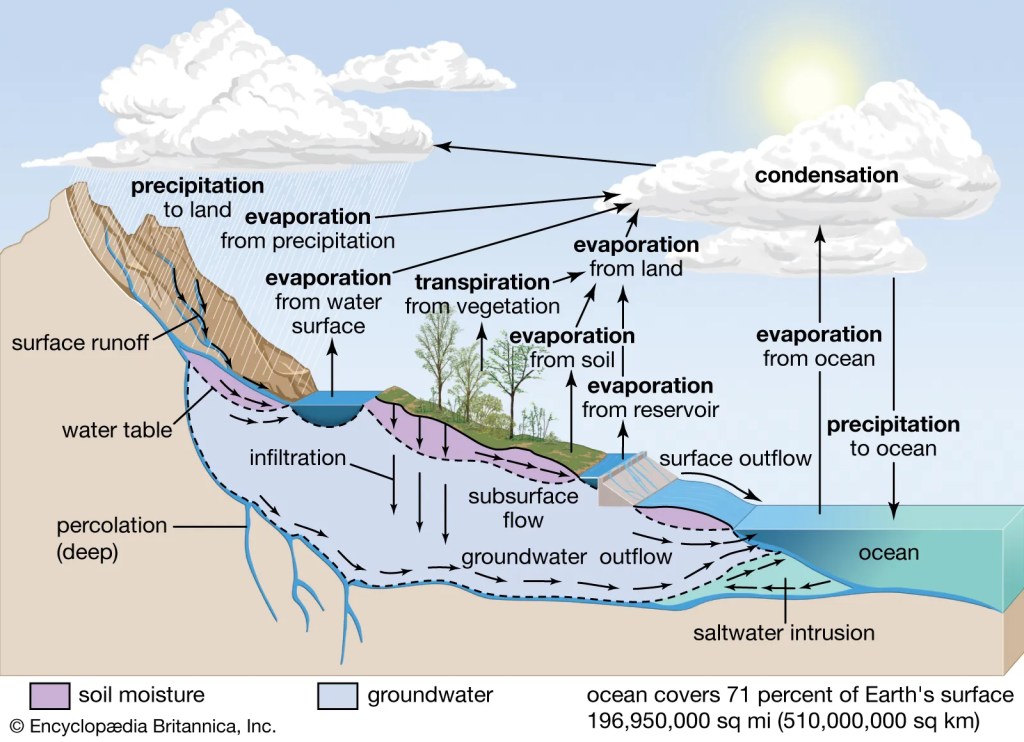
The water cycle is the continuous movement of water through the environment from the ground, into the air, and back down again as rain. It has three main stages.
Evaporation is when water turns into vapour and rises into the sky from oceans, rivers, lakes, and soil. Condensation happens when that vapour cools in the sky and forms clouds. Precipitation is the rain (or snow) that falls back down, refilling rivers, soil, and underground water.
Trees are deeply involved in all three stages more than most people realise.
How Trees Pull Water From the Ground
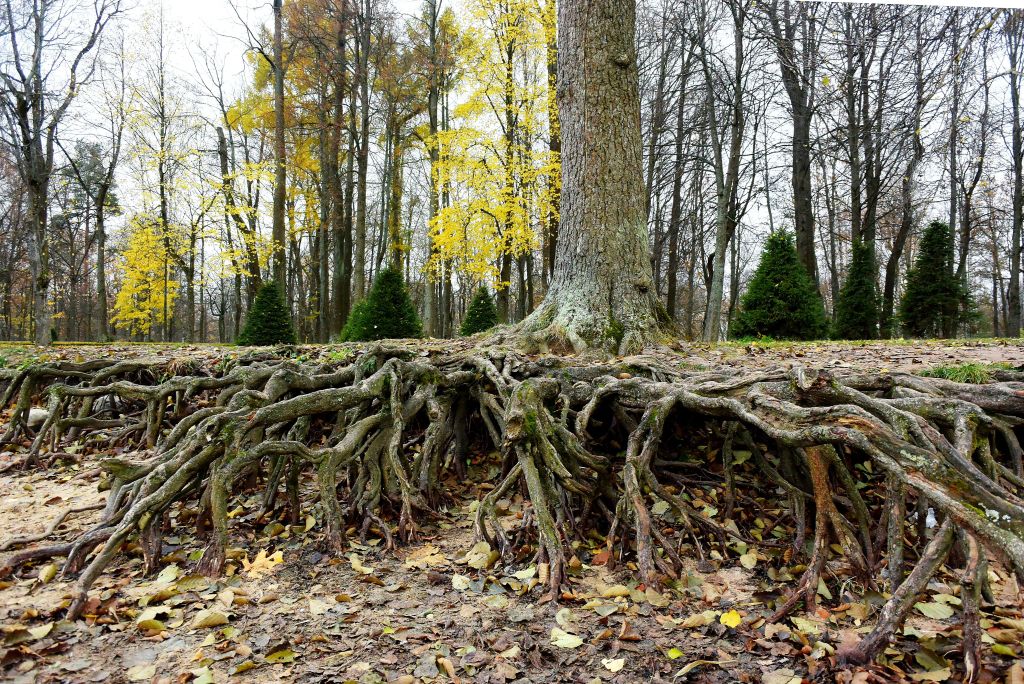
A tree’s roots stretch deep into the soil, absorbing water that has soaked in from rain. That water travels up through the trunk and out through the leaves in a process called transpiration. Essentially, the tree “breathes out” water vapour into the air through openings in its leaves called stomata.
A single mature tree can release thousands of litres of water into the atmosphere in a year. Multiply that across a forest, and you get something powerful enough to influence rainfall in the surrounding area.
Trees Help Refill Underground Water Too
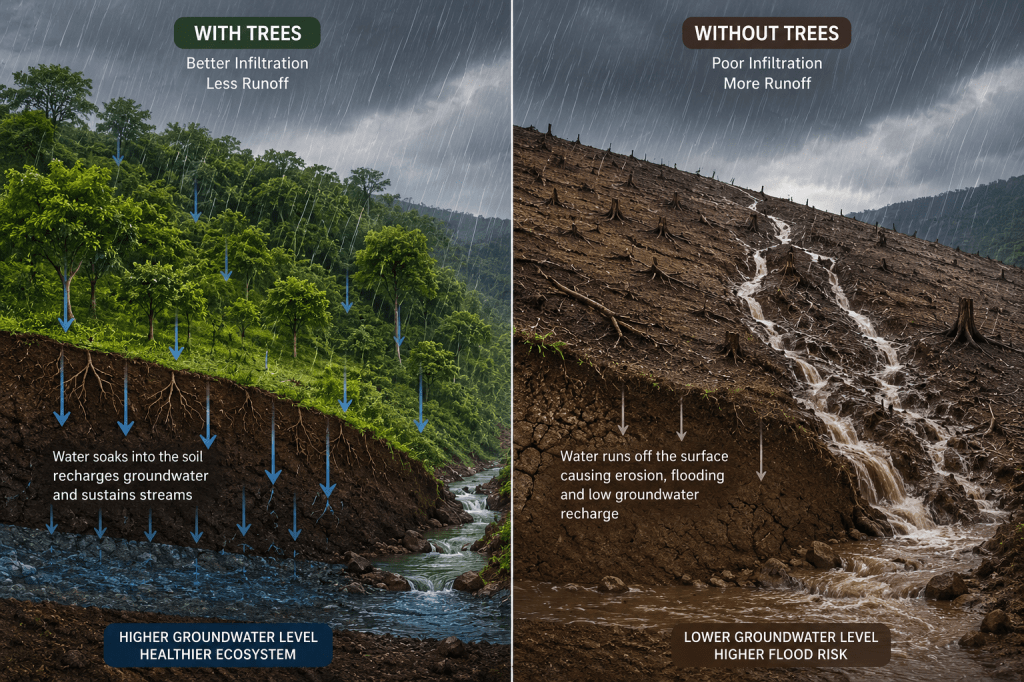
This is the part most people miss. As rain falls, tree roots create natural channels in the soil that help water travel downward instead of running off the surface. That water eventually reaches the underground stores called aquifers that boreholes and wells draw from.
This is why forest loss and dwindling water supply so often go together. When trees disappear, rain runs off quickly instead of soaking in, and the underground water that boreholes depend on stops being replenished properly. This is one of the most significant costs of losing forest cover.
A Surprising Twist: More Trees Isn’t Always Better
For years, scientists believed that planting more trees in dry areas would actually take away water rather than help. It turns out that is only half true.
Research now shows that a moderate amount of tree cover, not too much, not too little, is what helps groundwater the most. Too few trees, and rain runs off the surface without soaking in. Too many, and the trees themselves use up more water than the soil channels can replace. The balance matters more than the number.
Trees Can Even Help Bring the Rain Back
Beyond what happens underground, trees influence what happens in the sky too. The water vapour they release through transpiration adds moisture to the air; moisture that can eventually fall again as rain, sometimes in the very same region.
In other words, healthy tree cover does not just survive on rainfall. It helps create the conditions for more of it. Rainfall is shaped by the land beneath it just as much as by the climate above it.
What This Means for You
You do not need to plant a forest to take part in this. A single tree in your compound or even a few container plants help rainwater soak in rather than run off while adding shade and cooler air around your home. Even small green additions to a compound make a real difference.
At the community level, protecting existing trees rather than clearing every available plot protects the slow, quiet system that keeps water flowing underground for everyone.
Trees are not just decorations. They are part of how water moves through our world, pulling it underground, releasing it into the sky, and helping bring the rain back. Protecting them is, in a very real sense, protecting your own water supply.
Jay Water Advisory is committed to promoting sustainable water and environmental practices for communities across Nigeria and beyond.
 Jay water advisory
Leave a comment