By Jay Water Advisory
Most people think of rivers as something in the background, a landmark you cross on a bridge, a feature on a map, a place children swim. During the rainy season, rivers move from the background to the centre of everything. They swell, they accelerate, they carry things, and they deposit things. And the consequences of what they are do at the peak of their annual surge reach far beyond the riverbank itself.
A river is not just a body of water. It is a moving system, constantly collecting water from rainfall, from smaller streams called tributaries that feed into it, and from groundwater that seeps into its banks from the surrounding soil. Everything that falls as rain across a river’s entire catchment area eventually makes its way into the river itself.
A catchment area, sometimes called a watershed or drainage basin, is simply all the area of land that drains toward a particular river. Think of it like a giant funnel. Any rain that falls within that funnel eventually flows toward the river at its centre, whether it takes hours, days, or weeks to get there.
This matters because it means that what happens far away from a river can directly affect what is in the river weeks later. During the rainy season, that funnel is working at full capacity.
How rivers change in every rainy season
By August, which is usually the peak of rainy season, rivers across Nigeria have been collecting rainfall for several months. Their water levels are high — sometimes the highest they will reach all year. The water is moving faster than it does in the dry season, driven by the volume and pressure of everything flowing in from upstream.
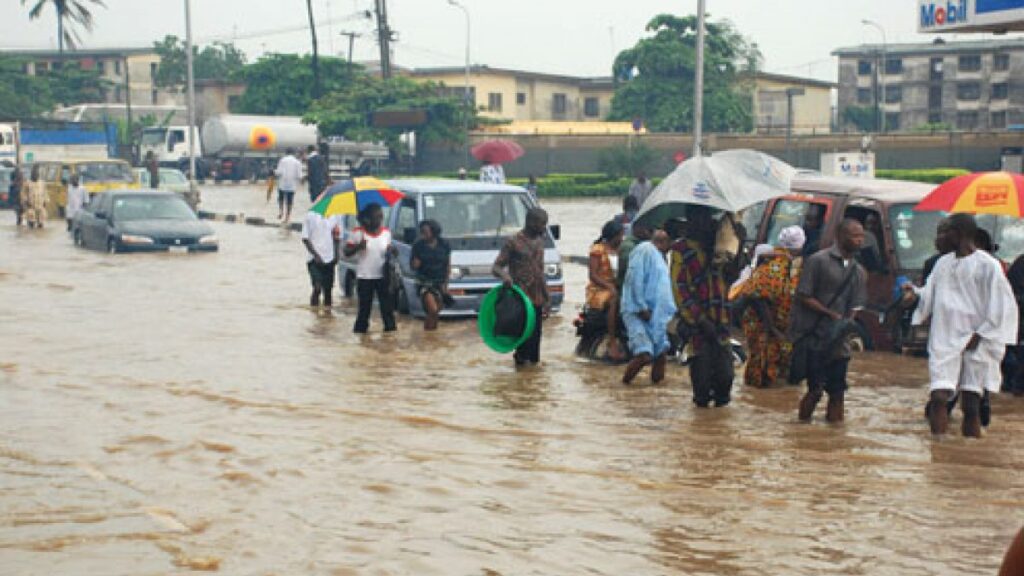
Rivers may begin to overflow their banks after receiving water flowing downstream from distant locations that experienced heavy rainfall several days earlier. This is one of the most surprising things about river flooding. A community can flood in relatively dry weather simply because somewhere else upstream received heavy rain several days before. The water travels downstream and arrives later, sometimes without warning.
What the river is carrying and leaving behind
A fast-moving, high-volume river in August is not just carrying water. It is carrying everything the water has picked up on its journey and what it carries has direct consequences for water quality in every community downstream.
Sediment — soil particles washed from riverbanks, farmland, and hillsides turns rivers brown during the rainy season. When that sediment settles in calmer sections of the river or at the point where the river slows, it raises the riverbed making the river shallower, reducing its capacity to carry future floodwater, and choking the plants and fish that live in it.
Waste and pollutants — everything that entered a drain, gutter, or open ground across the catchment area is now in the river. Plastic bags, food waste, chemical fertilisers washed from farms, sewage from overflowing pit latrines, oil from roads and mechanics workshops, animal waste — all of it.
Pathogens — bacteria, viruses, and parasites from sewage, animal waste, and human faecal matter travel in river water during the rainy season. When communities downstream draw water from the river or even flooded wells or borehole for drinking, cooking, or washing, those pathogens enter the household water supply. This is one of the primary reasons cholera and typhoid spike every rainy season. Rivers spread contamination from source communities to downstream ones over distances of many kilometres.
What This Means for Your Water
When a river overflows its banks and floodwater enters a compound, it carries everything the river has collected from upstream. That includes the faecal matter, the chemicals, the pathogens, and the waste from every community the river passed through. Borehole contamination after a flooding event is not a possibility, it is almost a certainty when the borehole was reached by floodwater.
Even communities not directly flooded feel the effect. Rivers carry contaminated sediment into coastal waters and lagoons. They raise water tables as they overflow and push water into surrounding soil. They block drainage systems as their levels rise, causing urban flooding that then carries the same contaminated water into residential areas and down toward boreholes.
What Communities Can Do
You cannot control what a river carries or when a dam releases water. But you can reduce your household’s exposure to the consequences.
Know whether you live in a river’s floodplain. A floodplain is the flat land beside a river that naturally fills with water when the river overflows. If your community floods every rainy season from river overflow rather than just from local rainfall, you are likely in a floodplain.
Never use river water for drinking during the rainy season without thorough treatment. River water in August carries the accumulated contamination of everything upstream. Boiling kills biological contaminants but does not remove chemical pollutants or heavy metals. If river water is your only available source during flooding, boil it and use it for non-consumption purposes where possible. Use only properly treated water for drinking and cooking.
Protect your borehole before river levels peak. Check and seal the borehole cap now, during the August break, before the second rainy season resumes. Inspect the wellhead for cracks or gaps. Ensure the area around the borehole is not a low point where floodwater would naturally collect. The borehole testing guide covers what to do before and after any flooding event.
Rivers are not passive features of the landscape. They are active, seasonal systems doing consequential work — collecting, carrying, transporting, and depositing. In August, at the peak of that work, understanding what they are doing and why is not just academic knowledge. It is the difference between being caught off guard and being prepared for what is coming.
Jay Water Advisory is committed to promoting sustainable water and environmental practices for communities across Nigeria and beyond.


Leave a Reply