By Jay Water Advisory
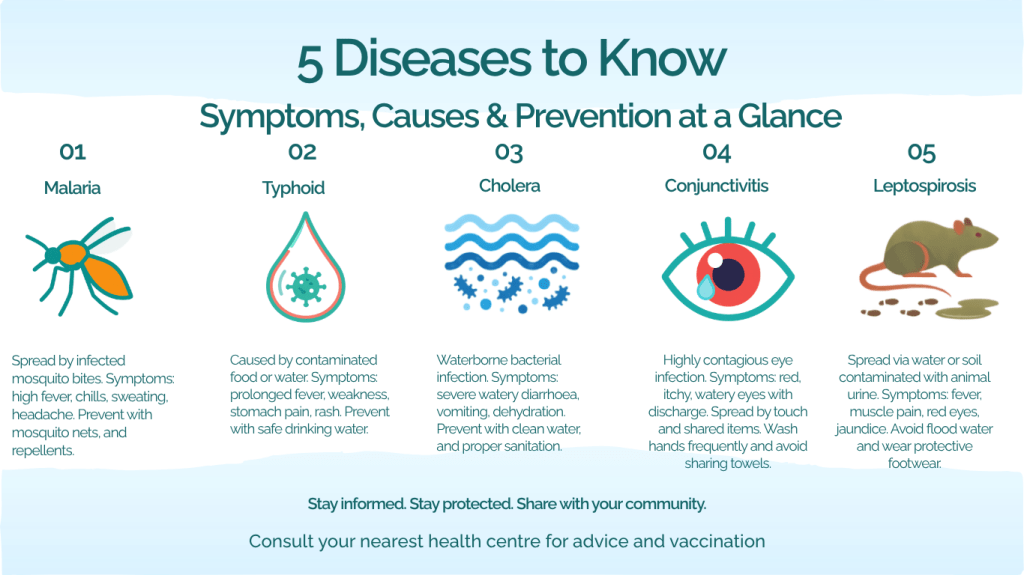
At the beginning of every season, there is usually a period of time when most people fall sick. This increases during the rainy season, particularly due to flooding (or stagnant water) and contamination caused by flooding. In a blink of an eye, hospitals get filled up during peak rainy seasons because of the following five common diseases.
Malaria
The rains leave stagnant water everywhere, in gutters, uneven concrete floors, old tyres, containers, even bottle caps. Mosquitoes breed in these and bite within days. Malaria is Nigeria’s biggest seasonal threat and peaks two to three months after heavy rainfall begins, meaning August and September are the worst months.
Stop it: Use mosquito nets for the windows, avoid leaving the door open, and use treated mosquito nets when sleeping at night. Empty anything holding standing water around your home. Clear blocked gutters and uneven concrete in the compound where water pools.
Cholera
Flooding pushes waste, garbage, and faecal matter into water sources. Children play in this water, households use it, and people fall sick. Over 8,000 suspected cholera cases were recorded in Borno State as of June 2026, with the rainy season expected to drive numbers higher.
Stop it: Boil all drinking water. Wash hands with soap before eating and after using the toilet. Do not use borehole water for drinking after any flooding event without testing it first. Our borehole testing guide covers exactly how.
Typhoid
During the rainy season, poor drainage makes it easy for Salmonella typhi bacteria to get into household water supplies. Typhoid symptoms are persistent fever, stomach pain, weakness and are often mistaken for malaria, which means many people treat the wrong illness first and get worse.
Stop it: Same as cholera. Boiled water, strict hand hygiene, and tested water sources. If you have had a fever for more than three days that does not respond to malaria medication, see a doctor and ask for a typhoid test specifically.
Leptospirosis
This one most people have never heard of, but it is spreading. Heavy rains force rats out of underground nests, and their waste washes into floodwater on streets. Walking barefoot or with open shoes through flooded streets allows the bacteria to enter your body through small cuts or scratches. It causes high fever, severe headache, red eyes, and muscle aches.
Stop it: Never walk barefoot through floodwater. Wear covered shoes or boots when moving through flooded areas. Wash feet and legs thoroughly with soap after any contact with floodwater.
Conjunctivitis (Apollo)
Conjunctivitis spreads more during the rainy season through direct contact with an infected person or touching contaminated surfaces and then touching your eyes. In crowded homes and communities, it moves fast.
Stop it: Do not share towels, pillowcases, or face cloths. Wash hands frequently. Avoid touching your eyes with unwashed hands.
The Rule That Covers All Five
The rainy season does not have to become a season of sickness. Most of the illnesses we see during this period can be prevented through environmental cleanliness, good hygiene, and timely medical attention.
Boil your water. Keep your surroundings clean. Drain stagnant water. Wear shoes in floodwater. Wash your hands. See a doctor early rather than late.
Simple rules but with real consequences when they are not followed.
Jay Water Advisory is committed to promoting sustainable water and environmental practices for communities across Nigeria and beyond.


Leave a Reply